Are you ready to customize your product?
Fill in your information and requirements, and we will address your inquiry promptly!

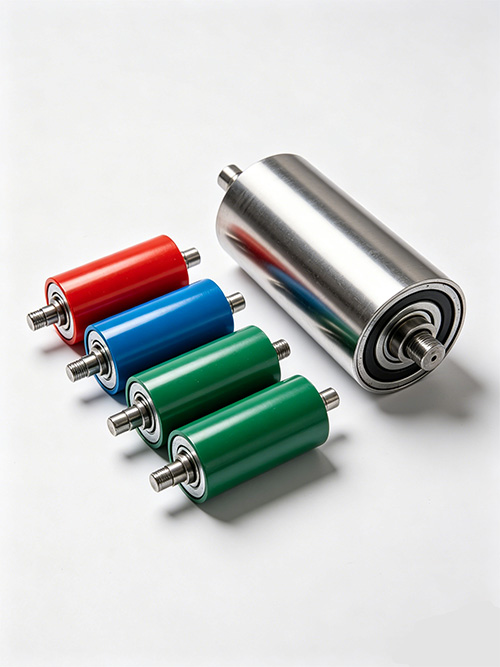
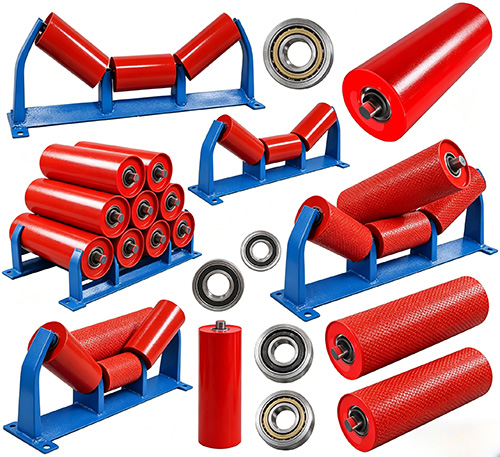
In a production line or material handling system, smooth transfer is often where efficiency is won or lost. A conveyor may run well in a straight section, but problems can appear when cartons, pallets, trays, fixtures, or workpieces need to move from one conveyor to another. This is where conveyor transfer rollers become important.
Conveyor transfer rollers help products move across gaps, corners, intersections, loading points, and transition areas. They support controlled movement between conveyor sections, reduce manual handling, and help keep the production rhythm stable. When selected correctly, they can improve flow, reduce product damage, support automation, and make the whole system easier to manage.
This guide explains what conveyor transfer rollers are, where they are used, how to select them, what problems to watch for, and how to maintain them for reliable long-term performance.
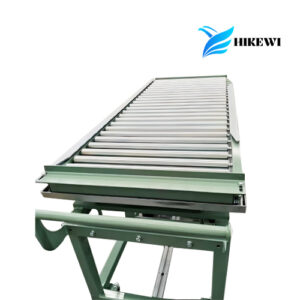
Conveyor transfer rollers are rotating roller components or roller sections used to move products from one conveyor position to another. They may be used in straight transfers, 90-degree transfers, merging points, diverting points, lifting transfer devices, or automated conveyor layouts.
Unlike ordinary support rollers that only carry a belt or product in a straight path, conveyor transfer rollers often work at transition zones. Their job is to help products move smoothly from one direction, height, or conveyor module to another.
In many automated systems, Transfer Conveyor equipment is used to change the direction or path of pallets, fixtures, product cases, or workpieces. Conveyor transfer rollers are often part of this kind of movement because they provide rolling contact and stable product support during the transfer process.
A good transfer roller design should reduce impact, prevent product tipping, support correct positioning, and match the load and speed of the conveyor system.
Transfer points are not simple gaps between machines. They are often the most sensitive parts of a conveyor layout.
When products move across a transfer area, several things happen at the same time. The product may change direction. The conveying speed may change. The support surface may shift from belt to roller, roller to chain, or roller to another conveyor module. If the transfer is not stable, products may skew, stop, collide, fall, or become misaligned.
Conveyor transfer rollers help reduce these risks by creating a smoother rolling surface. This is especially useful when products have flat bottoms, repeatable dimensions, or stable contact points.
In automated production lines, transfer rollers also help reduce manual intervention. Operators do not need to reposition every item by hand, which supports better consistency and lower labor intensity. For B2B buyers, this matters because production stability is not only about one machine. It depends on how every section connects.
Conveyor transfer rollers are widely used in production lines, packing lines, warehouse systems, assembly lines, pallet handling systems, sorting lines, and equipment connection areas.
In carton handling, transfer rollers help boxes move from one conveyor section to another without sudden stops. In pallet transfer systems, heavy-duty rollers provide a stable bearing surface for heavier loads. In assembly lines, they help fixtures or trays move between workstations. In automated layouts, transfer rollers may work with sensors, lifting devices, pushers, turntables, or PLC control systems.
They are also useful when space is limited. Instead of building a long straight conveyor line, a transfer roller section can help change product direction and improve layout flexibility.
For facilities that handle different product sizes, roller spacing and roller diameter become especially important. If the spacing is too wide, smaller products may dip between rollers. If the rollers are too small or too weak, they may not support the required load. Good design starts with understanding the product first.
There is no single roller design that fits every transfer point. The right type depends on load, speed, product size, transfer direction, and automation level.
Straight transfer roller sections are used when products move from one conveyor to another in the same direction. They are common at equipment connection points, packing lines, and short transition areas.
The main selection points are roller diameter, roller pitch, frame width, product bottom condition, and height matching. A small height difference between two conveyors can cause product impact or unstable movement, so the roller transfer section should be aligned carefully.
A 90-degree transfer system changes the product direction from one conveyor line to another. It may use roller sections, lifting devices, belts, chains, or a combined structure.
This design is helpful when a production line needs to save space or connect different process areas. The key challenge is maintaining product orientation and stable movement during direction change. If the product is too tall, too narrow, or poorly supported, it may tilt during transfer.
Pop-up transfer rollers move upward when a product needs to be transferred, then lower after the transfer is complete. They are often used in automated lines where products need to move between two directions or two conveyor paths.
This structure is useful for controlled transfer, but it requires careful synchronization. Roller height, lifting speed, product weight, and control timing all affect transfer stability.
Powered transfer rollers use a drive system to move products actively. They are suitable for controlled movement, heavier loads, or automated conveying. Gravity rollers rely on product weight or slope and are often used in simpler handling areas.
Powered rollers give better control, while gravity rollers are simpler and easier to maintain. The choice depends on the required speed, product weight, line layout, and automation level.
Before selecting conveyor transfer rollers, you should define the real operating conditions clearly. A roller that works well for light cartons may not work for pallets, metal parts, trays, or irregular products.
The first factor is product type. Is the product a carton, pallet, tray, fixture, crate, panel, or loose item? Does it have a flat bottom? Can it span at least several rollers at the same time? Products with soft, uneven, or unstable bottoms may need special roller spacing or additional support.
The second factor is load capacity. Each roller and the full transfer section must support the product weight safely. For heavy products, the shaft, bearing, roller tube, frame, and drive structure all need stronger design.
The third factor is roller spacing. As a practical rule, the product should be supported by multiple rollers during transfer. If the product only touches one or two rollers, movement may become unstable.
The fourth factor is transfer direction. A straight transfer is usually simpler than a side transfer or 90-degree transfer. Direction changes require better control over product position and timing.
The fifth factor is speed. If the upstream and downstream conveyors run at different speeds, the transfer area may create gaps, collisions, or product skew. Matching speed and control logic is important.
The sixth factor is environment. Dust, moisture, cleaning requirements, temperature changes, and product residue can affect bearing life and roller surface performance.
The roller tube material affects strength, wear resistance, noise, and cleanliness. Steel rollers are common for industrial use because they provide strong load support. Rubber-coated or plastic rollers may be used when product protection, noise reduction, or surface grip is more important.
Bearing quality has a major effect on smooth rotation. A weak bearing may create noise, heat, and uneven movement. In continuous production, bearing performance is one of the main factors that decides roller service life.
Roller spacing should match the product length and bottom structure. For small cartons, tighter spacing is usually needed. For large pallets, wider spacing may be acceptable if the load is properly distributed.
Load capacity should not only be calculated for static weight. During transfer, acceleration, stopping, product impact, and direction change can create additional stress. Buyers should leave enough safety margin instead of designing the system at the limit.
For belt conveyor related roller components, Conveyor Rollers used in demanding applications usually require durable structure, stable bearings, and reliable sealing. The same thinking applies to conveyor transfer rollers: the visible roller surface is only one part of performance. The internal bearing, shaft, sealing, and assembly accuracy matter just as much.
Many transfer problems are caused by small design or maintenance issues. These problems may not stop the line immediately, but they can reduce efficiency over time.
Product skewing is one common issue. This happens when products enter the transfer area at an angle, when roller speed is uneven, or when the load is not centered.
Jamming can happen when roller spacing is too wide, product bottoms are damaged, or the transfer gap is not properly controlled. A small carton edge or pallet corner can catch between rollers if the layout is not suitable.
Abnormal noise may come from worn bearings, loose shafts, poor alignment, roller surface damage, or product vibration.
Poor positioning can occur when the transfer section lacks proper stopping, guiding, or sensor control. In automated systems, a product that stops slightly out of position may affect the next process.
Roller wear may be caused by heavy load, abrasive product contact, frequent impact, or lack of maintenance. If one roller wears faster than others, the product may begin to move unevenly.
Maintenance should focus on keeping the rollers clean, aligned, and rotating freely.
Inspect roller rotation regularly. A roller that does not rotate smoothly can create product drag and may cause jamming.
Check roller height across the transfer section. Uneven height can make the product bounce or lean during movement.
Clean product residue from roller surfaces. Sticky material, dust, packaging fragments, and small debris can affect movement and create unstable transfer behavior.
Listen for noise changes. Bearing noise is often an early sign of wear or contamination.
Inspect fasteners and frames. Loose mounting points can cause roller misalignment and vibration.
Review the transfer area after product changes. A roller system designed for one product may not suit a new product size, weight, or bottom shape.
Good maintenance is not only about replacing failed rollers. It is about watching the transfer behavior and finding the reason behind repeated problems.
| Selection Factor | What to Check | Practical Recommendation |
|---|---|---|
| Product size | Length, width, height, bottom shape | Make sure each product is supported by multiple rollers |
| Product weight | Single item weight and load distribution | Choose roller tube, shaft, bearing, and frame strength with safety margin |
| Transfer direction | Straight, side transfer, 90-degree transfer, merging, diverting | Match roller structure and control logic to the required movement |
| Roller spacing | Distance between roller centers | Use closer spacing for smaller or less stable products |
| Roller surface | Steel, coated, rubberized, plastic, or special finish | Select based on load, noise, grip, and product protection |
| Bearing design | Rotation smoothness, sealing, load suitability | Prioritize reliable bearings for continuous operation |
| Conveyor speed | Upstream and downstream speed matching | Avoid product collision, gaps, or unstable acceleration |
| Environment | Dust, moisture, cleaning, product residue | Select suitable surface treatment and bearing protection |
| Automation level | Sensors, stops, lifting devices, PLC control | Ensure timing and positioning match the full line layout |
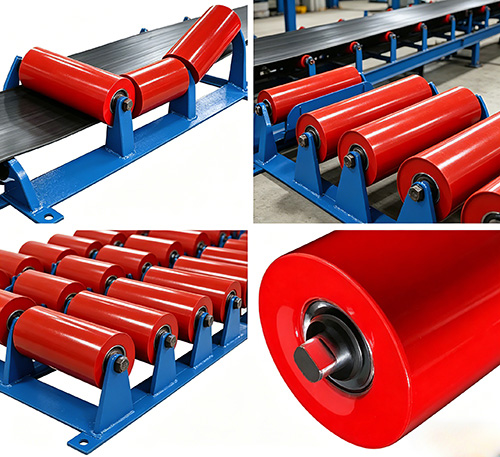
Transfer roller systems should be designed with practical engineering judgment, not only by copying a standard size. In a complete conveyor system, rollers, frames, drives, sensors, and transfer sections need to work together as one coordinated material handling process. Although conveyor transfer rollers may be used in different layouts, the same basic principle still applies: roller selection should consider load, dimensions, compatibility, product stability, transfer direction, and real operating conditions.
For buyers, this means a supplier should ask detailed questions before recommending a roller system. Product weight, product size, working speed, transfer direction, layout space, installation height, and automation requirements should all be confirmed.
A reliable conveyor transfer roller solution is not only a group of rollers. It is a matched system that connects upstream and downstream equipment smoothly.
One mistake is choosing roller spacing without checking the product bottom. If the item cannot span enough rollers, transfer stability will suffer.
Another mistake is ignoring speed differences. When two conveyors run at different speeds, products may collide, separate too much, or rotate unexpectedly.
Some buyers also focus only on roller diameter. Diameter matters, but shaft strength, bearing quality, frame rigidity, surface material, and installation accuracy are equally important.
A further mistake is overlooking maintenance access. If rollers are difficult to remove or inspect, small failures may take longer to fix.
It is also risky to use the same roller design for every area. A loading zone, a 90-degree transfer, a straight section, and a pallet transfer point may all need different roller structures.
For cartons and lightweight cases, smooth rotation and proper roller spacing are usually the key concerns. The product should not dip between rollers, and the transfer should not create sudden impact.
For pallets and heavier loads, load capacity becomes more important. The roller tube, shaft, bearing, frame, and drive structure must support repeated operation under real working stress.
For automated assembly lines, positioning accuracy is often more important than simple movement. Sensors, stops, lifting rollers, and speed control may be needed to keep every workpiece in the correct position.
For space-limited layouts, 90-degree transfer roller systems can help connect processes without extending the line too far.
For mixed product handling, flexibility matters. Adjustable guides, suitable roller pitch, and modular conveyor design can help the system handle different product sizes more reliably.
Conveyor transfer rollers play a practical but important role in modern material handling. They help products move smoothly between conveyor sections, reduce manual handling, support layout flexibility, and improve production flow.
The right conveyor transfer rollers should match the product size, load, transfer direction, working speed, environment, and automation level. Roller diameter alone is not enough. Bearing quality, roller spacing, surface material, frame strength, and control logic all affect real performance.
If your conveyor line often faces product skewing, jamming, unstable transfer, or manual repositioning, the transfer roller design may be worth reviewing. A well-matched roller transfer system can make the whole production line run more smoothly, with fewer interruptions and better long-term reliability.
What are conveyor transfer rollers?
Conveyor transfer rollers are roller components used to move products between conveyor sections. They help cartons, pallets, trays, or fixtures transfer smoothly across gaps, direction changes, merging points, or automated handling areas.
How do I choose conveyor transfer rollers?
Choose conveyor transfer rollers based on product size, load weight, roller spacing, transfer direction, speed, bottom shape, working environment, and automation needs. The product should stay stable across several rollers during movement.
What causes conveyor transfer rollers to jam?
Jamming may be caused by wide roller spacing, uneven product bottoms, poor height alignment, damaged rollers, debris buildup, weak rotation, or incorrect transfer timing between conveyor sections.
Are conveyor transfer rollers suitable for pallets?
Yes, conveyor transfer rollers can handle pallets when the roller tube, shaft, bearing, spacing, frame, and drive system are designed for the required load and transfer direction.
How often should conveyor transfer rollers be inspected?
Conveyor transfer rollers should be inspected regularly based on operating hours, load level, and environment. Check roller rotation, bearing noise, surface wear, frame alignment, and debris buildup during routine maintenance.