Are you ready to customize your product?
Fill in your information and requirements, and we will address your inquiry promptly!

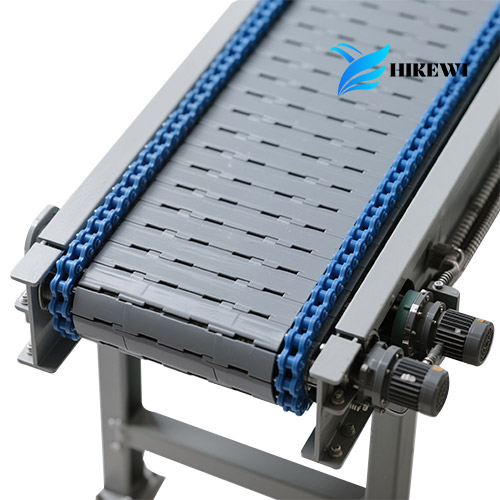
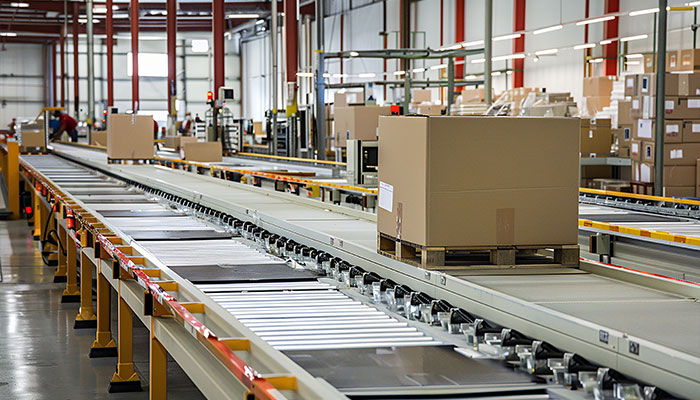
A chain conveyor belt is often searched as though it were one fixed type of conveyor, but the term actually covers several related material-handling concepts. In some systems, chains directly support and pull the load. In others, chains drive metal plates, plastic slats, fixtures, or carriers that together create a continuous or semi-continuous conveying surface. This is different from a conventional belt conveyor, where a flexible belt normally acts as both the carrying surface and the moving medium.
Understanding this distinction is important when choosing equipment. A conveyor designed to move rigid pallets, metal components, fixtures, or heavy assemblies faces very different mechanical requirements from a belt conveyor carrying lightweight cartons or continuously distributed material. Load concentration, chain pitch, sprocket design, conveying surface, lubrication, frame strength, operating speed, transfer points, and automation requirements all influence how the system should be configured.
A well-designed chain conveyor belt system is therefore not simply a stronger alternative to a standard conveyor belt. Its real advantage comes from matching chain-driven movement to applications where positive engagement, stable load transfer, durable carrying surfaces, or controlled positioning are more important than the flexibility of a conventional belt.
This article explains how chain conveyor belt systems work, the major configurations available, how they compare with conventional belt conveyors, and what engineering factors should be considered before selecting one for an industrial material-handling line.
A chain conveyor belt can be broadly described as a conveying system in which one or more endless chains provide the primary driving force and, depending on the design, may also form part of the load-carrying surface. The chain travels around sprockets positioned at the ends of the conveyor, creating continuous movement along a defined path.
The more established engineering term is often simply chain conveyor. Chain conveyors use endless chains to transmit movement and can carry loads directly on the chains or use attachments, plates, slats, flights, or carriers to move products. The phrase chain conveyor belt is frequently used in searches when the chain-and-slat arrangement visually resembles a continuous belt.
This terminology matters because a chain conveyor belt does not necessarily contain a conventional flexible conveyor belt. A metal slat conveyor, plastic chain conveyor, pallet chain conveyor, and differential chain conveyor may all use chain-driven principles while presenting very different surfaces to the transported product.
The choice should therefore begin with the structure of the conveyed load. If the product requires rigid support, positive mechanical engagement, resistance to impact, or controlled movement through demanding production processes, a chain-based system may offer advantages that are difficult to achieve with a flexible belt alone.
The basic operating principle begins with a drive unit that turns a shaft connected to one or more sprockets. These sprockets engage with the conveyor chain, pulling it along the frame. At the opposite end, the chain travels around another sprocket before returning toward the drive section and completing the continuous loop.
Because the sprocket teeth mechanically engage with the chain links, movement is positively transmitted rather than relying entirely on friction between a pulley and a flexible belt. This positive engagement is one of the important differences between chain-driven and conventional belt systems.
The load may interact with the chain in several ways. Pallets can rest directly across parallel chain strands. Metal or plastic slats can be attached between chains to create a broader carrying surface. Flights or pushers can move products along a supporting bed, while specialized fixtures can locate individual components at controlled positions.
As a result, the chain is not always the surface the product actually touches. It may function primarily as the mechanical drive behind a metal plate, plastic module, fixture, or carrier.
For this reason, good chain conveyor belt design requires several relationships to be considered simultaneously. Chain strength must match the load, sprockets must match chain pitch, shafts and bearings must support drive forces, the frame must maintain alignment, and the carrying surface must suit the product.
Increasing only one specification does not automatically increase system reliability. A stronger chain connected to undersized sprockets, poorly aligned guides, or an insufficient frame can simply move the mechanical weakness elsewhere.
Chain-driven conveyors can be configured in many ways because the chain can transmit motion to different carrying surfaces. Understanding the major structural differences helps prevent an equipment choice based only on the general term “chain conveyor.”
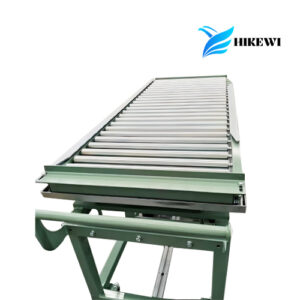
A pallet chain conveyor normally uses two or more parallel chain strands. The pallet rests across the chains, and synchronized chain movement transports it through the line. This arrangement is particularly useful when the pallet base provides suitable contact with the chain strands.
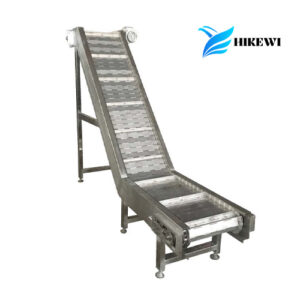
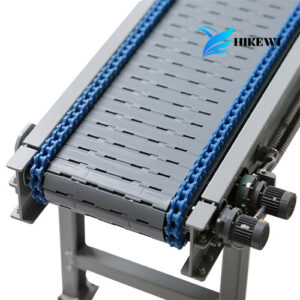
A slat or plate configuration connects multiple rigid sections to the chains, creating a broader conveying surface. Metal plates can provide a robust platform for components that would not remain stable on individual chain strands. Plastic chain systems use interlocking modules or slats and can provide a different balance of surface characteristics, flexibility, cleaning requirements, and product interaction.
Differential or double-speed chain conveyors use specialized chain arrangements that can move carriers or workpiece pallets through assembly and production processes. These systems are useful when products need to stop at individual workstations while the conveyor mechanism continues operating according to the process design.
The current Laienka chain conveyor range reflects this diversity, with chain-based equipment designed around different material forms, loads, production processes, and automation requirements.
The following table summarizes several common configurations and the design logic behind them.
| Chain Conveyor Configuration | Typical Carrying Method | Suitable Load Characteristics | Main Design Considerations |
|---|---|---|---|
| Parallel chain conveyor | Load rests directly across chains | Pallets and rigid carriers | Chain spacing, load base, synchronization |
| Metal slat chain conveyor | Metal plates attached to chains | Heavy, sharp, rigid or demanding loads | Plate strength, impact, chain capacity |
| Plastic chain conveyor | Interlocking plastic modules or slats | Containers and controlled unit loads | Surface contact, layout, cleaning |
| Double-speed chain conveyor | Work carrier supported by specialized chain | Assembly and processing workpieces | Positioning, accumulation, workstation control |
| Flight chain conveyor | Attachments push or guide material | Products requiring positive movement | Flight spacing, product geometry |
| Multi-strand chain conveyor | Load supported by several chains | Wide or heavy unit loads | Load distribution and synchronized drive |
The correct configuration is not necessarily the strongest one. It is the arrangement that provides the required support and movement with appropriate mechanical complexity.
Load capacity is an obvious consideration when selecting a chain conveyor belt, but total weight alone does not describe how the conveyor will behave.
Consider two rigid loads with identical mass. One has a wide base that distributes weight evenly across several chain strands or slats. The other has narrow feet that concentrate most of its weight in a few locations. Although their total weight is identical, the forces entering the chain conveyor structure can be significantly different.
The position of the center of gravity matters as well. An off-center load can place more force on one chain strand than another. In a two-strand pallet conveyor, poor weight distribution may cause one side of the system to experience greater loading even when both chains move at the same speed.
Product orientation can change this relationship. Rotating a pallet or workpiece may alter which supporting areas contact the conveyor, which can affect stability and load distribution.
Tall products require another level of consideration. A load with a high center of gravity may remain stable during constant-speed conveying but become less stable during abrupt acceleration or stopping. Smooth movement and controlled speed changes can therefore become part of the mechanical design requirement.
These examples demonstrate why the first step in chain conveyor belt selection should be understanding the transported item. Dimensions, underside geometry, weight distribution, center of gravity, orientation, and carrier construction all influence the equipment specification.
The relationship between the chain and sprockets is fundamental to reliable operation. Conveyor chains consist of repeating links with a defined pitch, and the sprocket tooth profile must be compatible with that chain geometry.
As the drive shaft rotates, each sprocket tooth engages with the chain and transfers mechanical force into the moving conveyor. This positive engagement allows a chain conveyor belt to handle applications where predictable mechanical transmission is important.
Chain pitch should be chosen according to the conveyor construction and required load rather than simply selecting the largest available chain. Larger or stronger chain components can increase capacity, but they may also increase rotating mass, component size, and overall mechanical requirements.
Sprocket alignment is equally important. Parallel chains need to remain synchronized so that the transported load does not skew or experience uneven movement. Poor shaft alignment, inconsistent sprocket positioning, chain wear, or structural movement can affect synchronization over time.
Drive torque must also reflect actual operating conditions. Starting a loaded conveyor creates different requirements from maintaining constant-speed movement after the system is already running. Frequent start-stop cycles, inclined conveying, product accumulation, and heavy carriers can further increase drive demands.
Motor power should therefore be selected after evaluating the complete resistance of the conveyor. Simply installing a larger motor does not compensate for unsuitable chain selection, excessive friction, poor alignment, or weak supporting components.
Chain and belt systems move materials continuously, but they transmit motion and support loads differently.
A conventional belt conveyor normally uses a flexible belt traveling around pulleys. The drive pulley transfers force through friction, and the belt provides a continuous surface underneath the transported material. This works well when products require broad, continuous support.
A chain conveyor belt relies more heavily on positive engagement between chains and sprockets. Depending on the design, products may rest directly on the chains or on rigid slats, plates, modules, or carriers driven by the chains.
This structural difference affects product compatibility. A flexible belt can support smaller or irregular products that would not sit reliably on individual chains. A chain system can provide a rigid or mechanically positive platform for products that require substantial support, controlled positioning, or demanding operating cycles.
Belt tracking and chain alignment also present different maintenance considerations. Belt systems require attention to pulley alignment, belt tension, and tracking. Chain systems require attention to chain elongation, lubrication where applicable, sprocket condition, guide alignment, and synchronization between parallel strands.
Neither system should automatically be considered better. Their strengths correspond to different material-handling requirements.
If a product needs continuous surface support and relatively smooth transportation, a belt conveyor may provide an appropriate solution. If the application requires rigid load support, positive chain engagement, specialized carriers, or a durable plate surface, a chain conveyor belt configuration may be more suitable.
The carrying surface has a major influence on where a chain conveyor can be used.
Metal chain plates or slats create a rigid conveying surface capable of supporting products that may be unsuitable for softer or more flexible conveying media. Components can be distributed across multiple plates, reducing the need for direct contact with individual chain strands.
Laienka’s metal chain conveyor is designed around a high-strength metal link-plate structure driven by chains, illustrating how the load-carrying surface and chain drive can work together as one conveying system.
Plastic chain surfaces operate on the same broad chain-driven principle but offer different physical characteristics. Their modular construction allows the conveying surface to be adapted according to product contact and system layout requirements.
The decision between different carrying surfaces should not be based only on material strength. Product shape, impact, surface sensitivity, contamination, cleaning, operating temperature, required layout, and maintenance requirements can all affect the final choice.
The supporting structure beneath the carrying surface is just as important. Strong plates attached to an inadequately designed chain or frame cannot deliver reliable heavy-duty performance. Surface material, chain, sprockets, shafts, bearings, guides, and frame should therefore be treated as one mechanical system.
The conveyor frame maintains the geometric relationship between chains, sprockets, guides, shafts, and supporting components. Even relatively small structural movement can affect chain alignment when a conveyor operates under repeated load.
A heavy or accumulated load may cause frame deflection if the structure or support spacing is insufficient. When this happens, chain guides may no longer remain parallel, which can create unequal resistance across the system.
Parallel chain conveyors are particularly dependent on consistent geometry. If the distance between the two chains changes along the conveyor or the drive shaft is not properly aligned, the load may skew or one chain may experience greater force.
Support locations should therefore reflect the actual load path. Areas where several products accumulate may require different structural consideration from sections that normally carry only one load.
Transfer devices can introduce concentrated forces as well. Stops, lifts, turntables, right-angle transfers, positioning mechanisms, and robotic interaction points may all place additional load into the conveyor frame.
Structural design should account for these forces from the beginning rather than adding reinforcement only after alignment problems appear.
Installation accuracy also matters. A strong conveyor mounted on an uneven support surface can still develop chain alignment issues. Frame leveling, shaft alignment, guide positioning, and connection between conveyor sections should therefore be checked as part of system commissioning.
The fastest conveyor is not necessarily the most productive conveyor.
Chain conveyor belt speed should reflect how products enter, travel through, stop within, and leave the system. A high conveying speed may move individual products quickly but create greater dynamic forces during starting, stopping, or transfers.
This becomes important with heavy unit loads. A product moving at higher speed contains more kinetic energy that must be controlled when it reaches a stop or positioning station. Abrupt deceleration can increase forces on the product, fixture, stop mechanism, chains, and frame.
Accumulation introduces another consideration. Traditional chain systems may continue moving even when a product is physically stopped, depending on the system design. Specialized carriers or differential chain systems can manage this interaction differently.
For assembly processes, movement may need to be coordinated with production stations rather than optimized for maximum belt speed. Work carriers can stop while operators, machines, or robots complete a process before the product is released downstream.
The correct operating speed should therefore come from required throughput and process timing. Product spacing, stopping distance, acceleration, transfer timing, and downstream equipment capacity all influence the final setting.
A stable line is normally more valuable than a conveyor that reaches a high nominal speed but continually creates congestion at the next process.
A chain conveyor belt may perform reliably across a straight section while experiencing its highest mechanical stress at transfer points.
When a pallet or work carrier moves from one conveyor to another, its support changes from one set of chains or plates to another. Excessive gaps can allow the product edge to drop before reaching the next section, creating impact.
Height differences create similar problems. A small step that appears insignificant during installation can become a repeated shock point when heavy loads cross it throughout every operating cycle.
Right-angle transfers require even more careful design because the direction of load support changes. Lifting chain modules, rollers, turntables, or other transfer mechanisms may temporarily raise the product from one conveying surface before placing it onto another.
Timing matters when these systems are automated. The first conveyor must position the product correctly before the transfer mechanism activates, and the receiving conveyor must be ready to accept the load.
Curved movement may require a different chain construction or conveyor layout. It should not be assumed that every chain conveyor designed for straight transportation can simply be redirected around a curve.
Transfer design should therefore be considered during the earliest layout stage. Product base geometry, load weight, chain spacing, conveyor height, speed, and control sequence all influence whether transitions remain smooth.
One of the useful characteristics of chain-driven conveying is its ability to integrate with fixtures, pallets, workpiece carriers, stops, and positioning systems.
In an automated assembly line, a carrier can move between individual production stations while maintaining a repeatable relationship with the conveyor. Sensors can detect its arrival, and a stop mechanism can hold it at the required position while a process takes place.
PLC control can coordinate conveyors with robots, inspection systems, machining equipment, assembly devices, lifting mechanisms, and transfer stations. Each conveyor section can operate according to the condition of upstream and downstream equipment rather than running independently.
Sensors may detect product presence, confirm whether a transfer area is clear, verify carrier position, or prevent another load from entering an occupied section.
However, automation cannot replace correct mechanical design. A control system cannot permanently correct chains that continually lose alignment because the frame is distorted. Sensors cannot eliminate impact created by a poorly designed transfer gap.
Mechanical stability and automation should therefore be developed together. Chain spacing, carrier geometry, conveyor speed, stop positions, sensor locations, transfer timing, and maintenance access all contribute to reliable system performance.
This is particularly important when future automation is expected. Providing suitable locations for sensors, cables, stops, transfer modules, and guarding during initial design can make later upgrades considerably easier.
Chain conveyor belt maintenance should focus on wear patterns rather than simply replacing components at fixed intervals without considering operating conditions.
Chain condition is one of the main areas to inspect. Repeated articulation around sprockets gradually affects chain components, and wear can eventually change effective chain length. When parallel strands wear differently, synchronization can become more difficult.
Lubrication requirements depend on the specific chain construction and operating environment. Where lubrication is required, correct application helps reduce friction and component wear. Excessive or unsuitable lubrication can create other maintenance challenges, so the chain manufacturer’s requirements should be followed.
Sprockets should be inspected together with the chains. A worn chain operating on new sprockets, or a new chain operating on severely worn sprockets, may not engage as intended.
Chain guides and supporting surfaces also need attention. Material buildup, mechanical damage, or misalignment can increase resistance and cause uneven loading.
Drive shafts, bearings, couplings, motors, frame fasteners, guards, and tensioning mechanisms should form part of the same inspection routine. A chain problem may sometimes originate from another component that has changed position or condition.
Maintenance teams should pay particular attention when the same issue repeatedly appears in the same location. Frequent chain adjustment, localized sprocket wear, one-sided guide damage, or repeated product skewing can indicate an underlying alignment or load-distribution problem rather than normal wear alone.
Selection should begin by documenting the load in detail. Record its dimensions, maximum operating weight, underside geometry, orientation, center of gravity, and any pallet, fixture, carrier, or container that remains with the product during conveying.
The next step is determining how the load should contact the conveyor. Some products can rest directly on parallel chains, while others require plates, slats, modular surfaces, or specialized carriers.
Once the carrying method is established, chain arrangement can be evaluated. Chain pitch, strand quantity, spacing, sprockets, shafts, bearings, guide structure, and frame capacity should all correspond to the same load requirement.
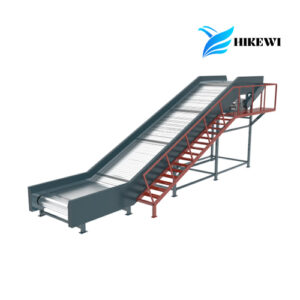
The operating process should then be defined. Conveyor length, working height, required speed, throughput, start-stop frequency, accumulation, incline, transfer points, direction changes, and positioning requirements influence drive and control design.
Environmental conditions also matter. Dust, debris, moisture, surface contamination, cleaning procedures, operating temperature, maintenance access, and production hours may affect chain material, carrying surfaces, bearings, guards, and lubrication strategy.
Finally, consider how the conveyor will interact with other equipment. Transfers, stops, sensors, robots, machines, lifts, and automated stations should be included in the specification rather than treated as separate systems after conveyor selection.
The result is a more useful engineering request. Instead of simply asking for a chain conveyor belt with a particular width or capacity, the specification describes how the entire load must move through the production process.
One of the most common mistakes is assuming that a stronger chain automatically creates a stronger conveyor. Overall capacity depends on chains, sprockets, shafts, bearings, guides, frames, supports, drives, and transfer mechanisms working together.
Another mistake is selecting a conveyor from total load weight without considering where that weight contacts the carrying surface. Uneven products can concentrate force on one chain strand or a small area of the conveyor.
Using excessive chain tension to solve alignment problems can create additional mechanical stress. Chain tracking issues should instead be investigated through sprocket alignment, guide condition, frame geometry, wear, and load distribution.
Transfer points are also frequently underestimated. Repeated impact at one conveyor junction can create more severe local loading than steady movement across the rest of the line.
Ignoring accumulation conditions can lead to structural underestimation. Several loads stopped in one section may create a much greater combined frame load than a system designed around one moving product.
Finally, equipment should not be overengineered without a process reason. Larger chains, heavier frames, or more powerful motors introduce additional size and mechanical complexity. The objective should be appropriate capacity and reliable operation rather than maximizing every specification.
A chain conveyor belt is best understood as a chain-driven material-handling system rather than simply a different version of a conventional flexible conveyor belt.
Its main design advantage comes from positive mechanical engagement between chains and sprockets, combined with the ability to use direct chain support, rigid metal plates, plastic modules, carriers, fixtures, or other specialized conveying surfaces.
Successful selection begins with the product. Weight, dimensions, underside geometry, orientation, center of gravity, and load distribution determine how the conveyor needs to support the material. Chain pitch, sprockets, shafts, bearings, frame strength, speed, transfers, and controls can then be developed around those conditions.
The equipment should also be evaluated as part of the production process. Starting, stopping, accumulation, transfers, positioning, automation, and maintenance can be just as important as nominal carrying capacity.
Rather than asking only how strong a chain conveyor belt is, a better engineering question is how the complete chain-driven system will support, move, position, and transfer the actual product throughout its operating cycle. That approach creates a stronger foundation for reliable material handling and long-term system performance.
What is a chain conveyor belt?
A chain conveyor belt is a chain-driven conveying system in which endless chains move loads directly or drive slats, plates, modules, fixtures, or carriers. Unlike a conventional flexible belt conveyor, movement is positively transmitted through engagement between the conveyor chains and sprockets.
What is the difference between a chain conveyor belt and a belt conveyor?
A chain conveyor uses chains and sprockets for positive mechanical movement, while a conventional belt conveyor normally uses friction between a flexible belt and drive pulley. Chain systems suit rigid loads and specialized carriers, while belts provide continuous support for a wider range of product bases.
What products can a chain conveyor belt handle?
Chain conveyor systems can handle pallets, rigid containers, work carriers, metal components, fixtures, assemblies, and other unit loads when the conveyor structure matches the product. The correct chain, carrying surface, strand spacing, and frame design depend on load weight, geometry, orientation, and process requirements.
How do I choose the correct chain conveyor configuration?
Begin with product dimensions, weight, supporting geometry, center of gravity, conveying direction, speed, throughput, and transfer requirements. Then evaluate whether the load should rest on parallel chains, slats, plates, modules, or carriers before selecting chain pitch, sprockets, drives, and structural components.
What maintenance does a chain conveyor belt require?
Maintenance generally includes inspecting chain wear, sprocket condition, alignment, tension, guides, shafts, bearings, drives, and frame connections. Lubrication should follow the requirements of the specific chain and operating environment. Repeated uneven wear should be investigated for alignment or load-distribution problems.