Are you ready to customize your product?
Fill in your information and requirements, and we will address your inquiry promptly!


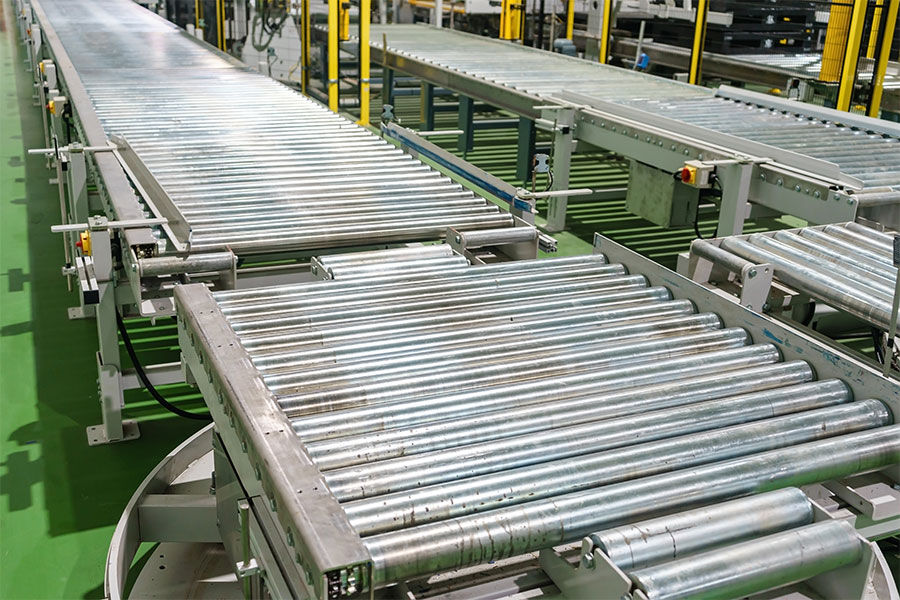
A heavy duty roller conveyor may look simple from the outside: a frame, a series of rollers, and a load moving from one end to the other. In practice, reliable heavy-load conveying depends on how well several engineering decisions work together. Roller diameter alone does not determine capacity, and installing a larger motor does not automatically create a more durable conveyor.
The real design challenge is controlling how weight enters the conveyor, how it is distributed across the rollers, how the structure reacts during acceleration and stopping, and how the load behaves as it passes between conveyor sections. Pallet dimensions, roller spacing, frame rigidity, bearing selection, drive method, transfer points, operating speed, and automation controls all influence the final result.
For applications involving pallets, rigid containers, fixtures, assemblies, or industrial workpieces, a correctly selected heavy duty roller conveyor can provide stable transportation while reducing unnecessary manual handling. This guide focuses on the practical engineering considerations that matter when designing or selecting such a system in 2026.
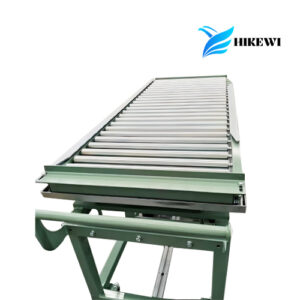
A heavy duty roller conveyor is a material-handling system that uses a series of cylindrical rollers to support and move comparatively large or heavy unit loads. Depending on the layout and operating requirements, the rollers may rotate freely under gravity or receive power through chains, motors, belts, or other drive mechanisms.
The term “heavy duty” should not be treated as a fixed weight classification by itself. In real projects, the required conveyor strength depends on the combination of payload, load dimensions, contact pattern, operating frequency, acceleration, transfer impact, conveyor width, roller spacing, and supporting structure.
This is why two loads with the same total weight may require very different conveyor designs. A wide pallet that distributes its weight across many rollers behaves differently from a compact fixture that places most of the load on only two or three contact points.
Within the broader conveyor system concept, roller conveyors are commonly configured in gravity, powered, accumulating, chain-driven, transfer, and automated arrangements. The most appropriate configuration depends on how the load needs to move rather than simply how much it weighs.
The rollers form the carrying surface of the conveyor. As the load moves, its weight is transferred through the roller tubes, shafts, bearings, side frames, legs, and ultimately into the supporting floor or machine structure. Every component along this load path has to be considered when determining whether the conveyor can operate reliably.
A gravity conveyor relies on manual force, load momentum, or a controlled decline to create movement. A powered system actively rotates the rollers and is more suitable when loads must move at a controlled speed, stop at defined positions, travel over longer distances, or interact with automated equipment.
Powered systems can also be divided into continuously driven and zone-controlled designs. Continuous drive is useful when steady movement is required, while zone control allows individual conveyor sections to start and stop independently. This can support accumulation, spacing, process synchronization, and controlled pallet movement.
The current Laienka Roller Conveyor specification range illustrates how several parameters are considered together rather than independently. The published configuration covers roller diameters from 50 to 150 mm, roller spacing from 80 to 300 mm, conveying speeds from 0.5 to 3 m/s, single-machine lengths from 1 to 10 m, and rated load capacities from 50 to 1000 kg/m.
These figures should be treated as an available configuration range rather than a universal design rule. The correct specification still depends on the actual load and operating conditions.
Load capacity is often the first specification users ask about, but total load weight is only the starting point.
Suppose two pallets each carry the same mass. One has a rigid, full-width base that contacts several rollers evenly. The other has narrow runners that concentrate the load on a much smaller contact area. Even though the total load is identical, the second pallet can generate considerably higher forces on individual rollers and bearings.
For preliminary engineering evaluation, it is useful to think about load per supporting roller:
Estimated roller load = total conveyed load ÷ number of rollers supporting the load
This calculation is useful for screening, but it is not sufficient for final design. Real operating conditions introduce dynamic effects. Acceleration, braking, pallet impact, uneven loading, surface irregularities, transfer gaps, and sudden stops can temporarily create forces higher than the static load suggests.
If a 900 kg pallet is theoretically supported by six rollers, the simple average would be 150 kg per roller. In reality, the load may not divide equally. Pallet deformation or an uneven base can cause several rollers to carry a greater percentage of the load.
For that reason, a reliable design should consider the most heavily loaded roller rather than assuming perfect distribution.
Static capacity describes what a structure can support while the load is stationary. Dynamic conveying introduces movement.
When a pallet accelerates, stops against a positioning device, passes onto another conveyor, or changes direction, additional forces enter the structure. Bearings, chains, sprockets, shafts, frames, and connections must therefore be selected for repeated operating cycles rather than a one-time stationary load.
This distinction becomes increasingly important as operating speed, load mass, start-stop frequency, and transfer complexity increase.
Roller diameter influences stiffness, bearing capacity, rotational characteristics, and resistance to bending. Larger rollers are often used when loads become heavier or conveyor widths increase, but diameter should always be evaluated together with tube wall thickness, shaft size, bearing design, and material.
Roller spacing is equally important.
A good conveyor layout keeps the load supported by several rollers throughout its movement. If the spacing becomes too large relative to the pallet or product base, the load may rock, sag, strike the next roller, or create concentrated loading.
For rigid unit loads, engineers normally begin by examining the shortest supporting dimension of the product. Roller pitch is then selected so that sufficient rollers remain beneath the load during normal travel and while crossing transfer points.
Increasing the number of rollers may improve load distribution, but simply reducing spacing indefinitely is not an efficient design strategy. More rollers also mean more bearings, shafts, rotating parts, drive components, and maintenance points. The goal is to find a practical support pattern that provides stable movement without unnecessary complexity.
Roller material must also match the operating environment. Steel is widely used where structural strength and resistance to deformation are important. Surface coatings, protective treatments, or alternative materials may be considered when cleanliness, corrosion exposure, product protection, or noise reduction creates additional requirements.
There is no single drive method that suits every heavy duty roller conveyor.
Gravity conveyors are mechanically simple and can be effective when the movement path allows loads to travel through manual force or controlled inclination. They contain fewer powered components, but operators must still control load speed and prevent uncontrolled movement.
Powered roller conveyors are more suitable when consistent speed and automatic movement are required. They can connect production processes, positioning stations, packaging systems, pallet handling equipment, and automated storage interfaces.
For heavier loads and demanding operating cycles, chain-driven rollers are commonly considered because the mechanical drive can transmit substantial torque across multiple rollers. The design needs appropriate chain tension, lubrication, guarding, sprocket alignment, and maintenance access.
Zone-controlled powered systems offer another approach. Instead of driving the entire conveyor continuously, separate sections operate according to sensors and control logic. This makes it possible to accumulate products without constant contact pressure and gives the automation system greater control over spacing and movement.
The correct choice therefore comes from the process requirement. A conveyor that only moves a pallet a short distance between two manual stations does not require the same control architecture as a line that automatically receives, scans, positions, transfers, and releases pallets.
Rollers often receive most of the attention during conveyor selection, but the frame carries the forces generated by the entire system.
A heavy duty conveyor frame must resist vertical bending, lateral movement, vibration, and repeated dynamic loading. Frame depth, steel section geometry, cross bracing, leg spacing, connection design, and anchoring all influence structural behavior.
Long conveyor sections require particular attention. Even when individual rollers have adequate capacity, excessive frame deflection can alter roller alignment. Once rollers no longer remain correctly aligned, loads may drift, bearings can experience uneven forces, and drive chains may no longer track properly.
Support locations should therefore be planned around the actual load path rather than positioned at arbitrary intervals. Heavier transfer zones, stops, lifts, turntables, or robotic interaction points may require additional reinforcement.
Floor conditions matter as well. A structurally strong conveyor cannot perform as designed if its supports sit on an uneven or unstable base. Installation accuracy becomes part of the system’s mechanical performance.

A heavy duty roller conveyor should be designed around the load that actually touches the rollers.
That distinction is important because “pallet” describes many different base structures. Some pallets have full-length runners, some have several feet, and others have openings that may interact poorly with roller spacing.
Before selecting the conveyor, record the load length, width, overall height, base structure, total mass, load distribution, center of gravity, and direction of travel.
The orientation of the pallet can change the entire design. A pallet traveling runner-first may maintain continuous contact with several rollers, while rotating the same pallet 90 degrees can create gaps in support. In some cases, the product orientation matters more than the nominal load rating.
Tall loads introduce another concern. A high center of gravity increases sensitivity to abrupt acceleration, sudden stopping, uneven transfers, and conveyor misalignment. Smooth speed changes and well-designed transfer points become more important as load height increases.
For irregular workpieces, fixtures or carriers may provide a more predictable interface between the product and the conveyor.
Modern roller conveyors increasingly function as part of a connected process rather than as isolated transportation equipment.
Sensors can identify product arrival, confirm pallet position, control accumulation zones, detect blocked sections, and communicate with upstream or downstream equipment. PLC logic can coordinate conveyor speed and timing with palletizers, robots, elevators, transfer tables, inspection stations, and production machinery.
Good automation begins with stable mechanical handling. Software cannot fully compensate for a pallet that rocks because roller spacing is incorrect or for a load that shifts because transfer geometry is poor.
This is why mechanical and control design should be developed together.
For example, a positioning station may require the conveyor to move quickly through most of the section and then reduce speed before stopping. This reduces impact and provides more repeatable positioning. In another layout, individual zones may hold pallets until the downstream machine confirms that it is ready.
Transfer sections deserve special attention. Moving a heavy load between conveyors requires matching height, roller elevation, direction, speed, and gap dimensions. Poor transitions can cause impact, pallet vibration, product shifting, or premature component wear.
Roller and belt conveyors solve different handling problems.
A roller conveyor provides discrete contact points and is particularly effective for rigid loads with stable bottoms, including pallets, containers, panels, fixtures, and many manufactured assemblies. The spaces between rollers also make it possible to integrate stops, lifts, transfers, and other mechanisms into the conveyor bed.
A belt conveyor provides a continuous carrying surface. This can be useful for smaller items, soft packages, irregular bases, or products that cannot bridge roller gaps reliably.
The choice should therefore be made according to product contact conditions rather than assuming one design is universally stronger. A heavy pallet with stable runners may fit a roller system very well, while an irregular package of much lower weight may require a belt simply because its base needs continuous support.
The existing Flat Belt Conveyor vs Roller Conveyor discussion provides additional context on how product shape, handling requirements, and conveyor surface influence system selection.
Heavy duty roller conveyors are especially useful wherever rigid unit loads must move repeatedly along a defined path.
Pallet handling is one of the clearest applications. A roller conveyor can connect palletizing, storage, inspection, assembly, packaging, loading, and transfer processes while keeping the load at a consistent handling height.
Manufacturing lines also use roller conveyors for fixtures, machine components, fabricated assemblies, panels, containers, and work carriers. In these environments, the conveyor may do more than transport. It can become part of the production sequence by controlling where a workpiece stops and when it moves to the next stage.
Warehouse and logistics operations can use roller systems to link receiving areas, storage interfaces, sorting points, packing areas, and dispatch processes. Automated systems may combine conveyors with barcode readers, sensors, palletizers, transfer modules, or robotic handling.
The design principle remains the same across these applications: the conveyor should be engineered around the physical behavior of the load and the required process flow.
A heavy-load conveyor that operates every day benefits more from predictable maintenance than from emergency repair.
Rollers should be checked for abnormal noise, resistance, looseness, surface damage, or deformation. A roller that no longer rotates freely can increase drive load and place additional stress on surrounding components.
Bearings deserve similar attention. Contamination, insufficient lubrication where applicable, misalignment, and repeated impact can shorten bearing life. Maintenance intervals should reflect operating hours, environmental conditions, load severity, and equipment design rather than relying on one universal schedule.
Chain-driven systems require inspection of chain tension, sprocket condition, lubrication, and alignment. Excessive slack can create shock loading, while excessive tension increases bearing and shaft forces.
Frame fasteners, supports, guards, sensors, and emergency-stop devices should also form part of regular inspection. Small alignment changes can gradually develop into tracking problems, uneven roller loading, or increased component wear.
Cleaning is particularly important where dust, chips, packaging debris, or process residue can accumulate around rollers and bearings. Keeping the conveyor accessible for inspection is therefore a design consideration, not merely a maintenance issue.
Selection should begin with the load, not the conveyor catalog.
First document the minimum and maximum product dimensions. Then record the actual operating weight, including the pallet, carrier, fixture, packaging, or tooling that moves with the product.
Next, examine the underside of the load. Identify where it contacts the rollers and how many rollers are likely to carry the load simultaneously. This step helps determine suitable roller spacing and reveals whether the load is actually compatible with roller conveying.
After that, define the required process. Consider conveyor length, direction of travel, operating speed, throughput, accumulation requirements, stopping accuracy, transfer points, working height, and interaction with other equipment.
The drive system can then be selected around those requirements. A simple gravity section, continuous powered conveyor, chain-driven system, or individually controlled zones may each be appropriate in different circumstances.
Finally, evaluate the operating environment. Dust, moisture, temperature, cleaning procedures, impact, contaminants, noise limits, maintenance access, and operating hours can all influence component selection.
For custom projects, a useful technical specification should include at least the following information: product dimensions, maximum total load, base geometry, conveyor width, required length, speed, conveying direction, throughput, transfer method, operating environment, and automation requirements.
This information gives an equipment engineer a much stronger foundation than a request based only on load capacity.

One common mistake is choosing equipment from total payload alone. A stated load capacity does not automatically confirm that a conveyor will handle a particular pallet because the actual forces depend on how that load reaches the rollers.
Another mistake is using excessive roller spacing. If the product does not maintain adequate support, it may bounce, tilt, jam, or overload individual rollers.
Transfer sections are also frequently underestimated. A conveyor may perform well along a straight section but experience repeated impact where pallets cross a gap or enter another machine.
Drive selection can create similar problems. Oversizing a motor does not solve weak rollers, inadequate shafts, unsuitable bearings, poor chain alignment, or insufficient frame strength. Conveyor capacity comes from the complete mechanical system.
Ignoring future automation is another avoidable problem. Even when a conveyor begins as a manually controlled system, leaving appropriate space for sensors, stops, control panels, transfer devices, or production-line interfaces can simplify later upgrades.
The best design is therefore not necessarily the conveyor with the largest components. It is the system in which load support, drive capacity, structural strength, transfer geometry, controls, and maintenance access have been matched to the same operating requirement.
A heavy duty roller conveyor should be treated as an engineered load-handling system rather than a row of strong rollers.
Reliable performance starts with understanding the load: its weight, dimensions, underside structure, center of gravity, orientation, and movement pattern. From there, roller diameter, roller spacing, shafts, bearings, frame structure, drive configuration, transfer points, speed, and automation controls can be selected as one coordinated system.
For pallet handling and industrial production lines, this approach provides a more dependable basis for conveyor selection than comparing capacity figures alone. A correctly designed system distributes loads effectively, moves products predictably, integrates more easily with automation, and gives maintenance teams better control over long-term reliability.
The most useful question is therefore not simply, “How much weight can this conveyor carry?” A better question is, “How will this specific load behave on this conveyor throughout the entire operating cycle?”
That shift in thinking is what turns a basic conveyor specification into a practical heavy-duty material-handling solution.
What is a heavy duty roller conveyor used for?
A heavy duty roller conveyor is used to move rigid, comparatively heavy unit loads such as pallets, containers, fixtures, work carriers, and industrial assemblies. It is commonly integrated into material handling, manufacturing, warehousing, assembly, transfer, and automated production processes.
How much weight can a heavy duty roller conveyor handle?
Capacity depends on roller diameter, shaft and bearing design, roller spacing, conveyor width, frame strength, drive configuration, and how the load is distributed. Total product weight alone is not enough; engineers must also determine how many rollers support the load during movement.
How do I choose roller spacing for heavy loads?
Roller spacing should keep the product or pallet reliably supported throughout travel and across transfer points. The shortest load-supporting dimension, pallet runner arrangement, weight distribution, roller capacity, and direction of travel should all be reviewed before the final pitch is selected.
Is a powered roller conveyor better for heavy pallets?
Powered conveying is often preferred when heavy pallets need controlled speed, automatic starting and stopping, accumulation, positioning, or integration with other equipment. Gravity systems remain useful in suitable layouts, so the better option depends on movement control rather than pallet weight alone.
What information is needed to design a heavy duty roller conveyor?
A useful design brief should include load dimensions, maximum operating weight, pallet or product base geometry, travel direction, conveyor length and width, required speed, throughput, transfer points, accumulation needs, operating environment, and any sensors or automation that must interact with the conveyor.