Are you ready to customize your product?
Fill in your information and requirements, and we will address your inquiry promptly!


In modern woodworking production, surface finishing quality directly affects the appearance, durability, and overall value of wooden products. Whether manufacturing furniture components, decorative panels, or customized wood products, achieving a smooth and consistent surface is a critical step before coating, assembly, or final inspection.
A dual-wheel sanders is a specialized sanding machine designed with two sanding wheels or abrasive units that work together to improve surface treatment accuracy and processing stability. Compared with traditional single sanding methods, the dual-wheel structure provides better control over material removal, surface consistency, and finishing performance.
As woodworking industries continue to focus on higher precision and more efficient production processes, two-wheel sanding technology has become an important solution for manufacturers that require reliable surface finishing results.
This article explains why dual-wheel sanders are important for precision wood surface finishing, including their working principles, structural advantages, applications, and factors to consider when selecting suitable equipment.
A dual-wheel sanders uses two sanding units to process wood surfaces through controlled abrasive contact. Each sanding wheel performs a specific function during the finishing process, allowing materials to receive more balanced and consistent treatment.
The two-wheel structure can help distribute sanding pressure more evenly across the surface. This reduces the risk of uneven material removal and improves the final surface quality.
The basic working process includes:
Depending on machine design, the two sanding wheels may use different abrasive specifications. One wheel can perform stronger material removal, while the second wheel focuses on refining the surface.
This combination allows manufacturers to achieve both efficiency and precision during wood processing.
Surface finishing is more than simply making wood look smooth. It influences how the material performs during later production stages.
A properly finished wood surface provides several benefits:
For industries producing furniture, panels, flooring materials, and decorative products, small surface differences can affect the final product quality.
Professional woodworking processes often combine multiple techniques, and woodworking includes various stages such as shaping, joining, and finishing to achieve the desired results.
A reliable sanding process helps ensure that each production step works together effectively.
The dual-wheel structure gives Two-Wheel Sanders several advantages compared with simpler sanding equipment.
One of the most important benefits of a Two-Wheel Sander is improved surface consistency.
Because two sanding units work together, the machine can provide more balanced processing across the material surface. This is especially valuable when handling large panels or components where uniform appearance is required.
Different sanding stages often require different levels of abrasion.
The first wheel can handle initial surface correction, while the second wheel can refine the finish. This staged approach helps achieve accurate results without excessive material removal.
Uneven sanding pressure may create marks, scratches, or inconsistent textures.
The two-wheel configuration helps stabilize the sanding process, reducing the possibility of visible surface problems after finishing.
For industrial production, consistent output is essential.
Two-Wheel Sanders help manufacturers maintain stable finishing results across multiple production cycles, supporting better quality control.
Understanding the structure of a Two-Wheel Sander helps explain why it performs effectively in precision applications.
| Component | Function | Impact on Performance |
|---|---|---|
| Sanding Wheels | Apply abrasive force to wood surfaces | Determines finishing quality and material removal |
| Feeding System | Controls material movement through the machine | Improves processing consistency |
| Pressure Mechanism | Maintains stable contact between material and sanding units | Reduces uneven finishing |
| Control System | Adjusts operating parameters | Supports accurate processing |
| Dust Collection System | Removes sanding particles | Improves cleanliness and equipment stability |
Each component contributes to the overall performance of the machine. Proper coordination between these parts allows Two-Wheel Sanders to achieve reliable finishing results.
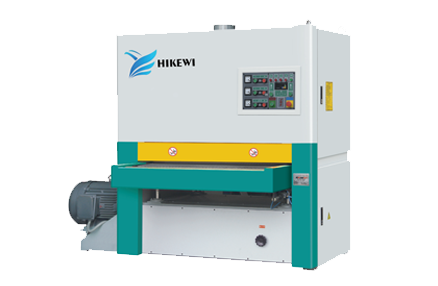
Two-Wheel Sanders are widely used in applications where surface accuracy and consistency are important.
Furniture production requires high-quality surface preparation before painting, coating, or assembly.
Two-Wheel Sanders help process:
The ability to maintain consistent finishing quality makes them suitable for professional furniture production environments.
Wood panels often require smooth and even surfaces before additional processing.
Two-wheel sanding systems can improve panel appearance and help create more uniform thickness and texture.
Custom woodworking projects often involve different materials, shapes, and finishing requirements.
The flexible operation of Two-Wheel Sanders allows manufacturers to achieve precise results across various product designs.
In larger production environments, sanding equipment is an important part of continuous manufacturing systems.
Two-Wheel Sanders can be integrated with other wood processing equipment to create organized and efficient production workflows.
Different sanding methods provide different levels of performance depending on production needs.
| Feature | Two-Wheel Sander | Traditional Manual Sanding |
|---|---|---|
| Surface Consistency | High consistency through controlled processing | Depends on operator technique |
| Processing Speed | Suitable for continuous production | Slower for large volumes |
| Accuracy Control | Adjustable machine parameters | Limited adjustment capability |
| Labor Requirements | Reduces repetitive manual work | Requires more direct labor |
| Production Stability | Provides repeatable results | May vary between products |
For manufacturers focused on precision and repeatability, machine-based sanding provides advantages over manual finishing methods.
Selecting the right Two-Wheel Sander requires consideration of production requirements and material characteristics.
Different wood materials may require different sanding approaches.
Important considerations include:
Understanding the material characteristics helps determine suitable sanding configurations.
The sanding wheel configuration directly influences processing results.
Factors such as abrasive type, wheel size, and adjustment capability should match the intended application.
Manufacturers should consider expected processing volume when selecting equipment.
A suitable machine should provide enough capacity while maintaining stable finishing performance.
Effective dust collection is important for maintaining equipment performance and a cleaner working environment.
A well-designed dust management system also helps protect machine components from excessive buildup.
Modern woodworking increasingly focuses on automation, efficiency, and consistent quality.
Two-Wheel Sanders support these goals by providing:
When combined with automated feeding systems and digital controls, sanding equipment can become part of a more advanced manufacturing workflow.
This development allows manufacturers to improve production planning and maintain higher quality standards.
Regular maintenance is essential for keeping Two-Wheel Sanders operating effectively.
Sanding wheels and abrasive materials should be checked regularly to ensure consistent performance.
Wood particles can accumulate during operation. Regular cleaning helps maintain machine efficiency and prevents unnecessary wear.
Important components such as bearings, feeding mechanisms, and adjustment systems should be inspected periodically.
Correct machine settings help prevent uneven processing and ensure stable finishing results.
Preventive maintenance reduces unexpected interruptions and extends equipment service life.
The future development of Two-Wheel Sanders is closely connected with intelligent manufacturing and improved processing accuracy.
Several trends are becoming increasingly important:
Digital monitoring and automatic adjustment technologies can improve sanding accuracy and production management.
New machine designs focus on achieving better surface quality while reducing unnecessary material removal.
Modern sanding equipment is increasingly designed to connect with complete woodworking production systems.
As manufacturers continue seeking higher precision and efficiency, Two-Wheel Sanders will remain an important solution for advanced surface finishing applications.
Two-Wheel Sanders play an important role in precision wood surface finishing by providing stable processing, improved consistency, and better control over material removal.
Their dual-wheel structure allows manufacturers to achieve smoother surfaces and more reliable finishing results compared with traditional sanding methods. From furniture manufacturing to industrial wood processing, these machines provide valuable support for producing high-quality wooden products.
By understanding their working principles, advantages, applications, and selection factors, manufacturers can better determine how Two-Wheel Sanders fit into their production requirements.
What is a Two-Wheel Sander used for?
A Two-Wheel Sander is used for precision wood surface finishing. It removes imperfections, improves smoothness, and prepares wooden materials for coating, assembly, and further processing.
How does a Two-Wheel Sander work?
A Two-Wheel Sander uses two abrasive wheels to process wood surfaces. The dual sanding structure allows more balanced material removal and helps create consistent finishing results.
What are the benefits of using a Two-Wheel Sander?
The main benefits include improved surface uniformity, better finishing accuracy, reduced defects, and more stable production performance for woodworking applications.
Which industries use Two-Wheel Sanders?
Two-Wheel Sanders are commonly used in furniture manufacturing, wood panel processing, customized woodworking, and industrial wood production environments.
How can Two-Wheel Sander performance be maintained?
Regular inspection of sanding wheels, cleaning of dust buildup, checking mechanical components, and maintaining correct operating settings help ensure reliable performance.