Are you ready to customize your product?
Fill in your information and requirements, and we will address your inquiry promptly!

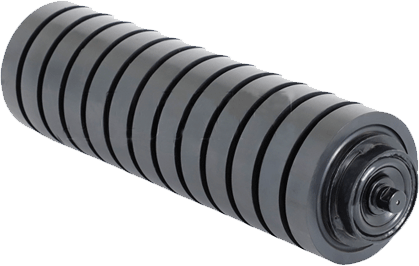
If your conveyor system depends on rubber rollers, then you already know one thing: the quality of these components directly affects everything—belt stability, noise levels, maintenance frequency, and even total production cost. What many operators underestimate is that the real difference often comes not from the design of the roller itself, but from the rubber roller manufacturer behind it.
Choosing the right manufacturer is not just a sourcing decision. It is a long-term operational strategy. A well-engineered rubber roller can run smoothly for years, while a poorly manufactured one can fail within months, creating downtime, misalignment, and unexpected maintenance expenses.
In this guide, you will learn how to evaluate a rubber roller manufacturer from a technical and practical perspective, how to compare manufacturing capabilities, and how to avoid common sourcing mistakes that many industrial buyers only discover after system failure.

When you evaluate rubber rollers, it is easy to focus on surface appearance or basic specifications such as diameter, hardness, or length. However, in real industrial applications, these parameters alone do not determine performance.
The manufacturer behind the roller controls:
Industry maintenance data from material handling systems shows that more than 60% of premature roller failures are linked to manufacturing defects rather than design misuse. This means your supplier selection has a greater impact than most technical adjustments you can make later.
Before evaluating a manufacturer, you should understand what rubber rollers actually do in your system.
Rubber rollers help distribute load evenly across conveyor belts, reducing stress concentration.
The rubber surface increases friction, helping prevent belt slippage in drive or guiding applications.
In high-impact zones, rubber rollers absorb vibration and protect both belt and structure.
Compared to steel rollers, rubber-coated rollers significantly reduce operational noise.
Not all manufacturers operate at the same technical level. To make the right decision, you need to evaluate them across several core capabilities.
A professional manufacturer should be able to control rubber hardness, elasticity, and wear resistance based on application needs. For example, higher hardness is typically used in high-load environments, while softer compounds improve grip and shock absorption.
The internal shaft or core of the roller must be precisely machined. Poor concentricity leads to vibration, which shortens system life.
One of the most critical processes is the bonding between rubber and metal core. Weak bonding leads to separation under stress or temperature changes.
High-quality manufacturers perform dynamic balancing to ensure smooth rotation at operating speeds.
A reliable manufacturer should test:
| Capability Area | Low-Level Manufacturer | Professional Manufacturer | Industrial-Grade Manufacturer |
|---|---|---|---|
| Rubber Compound Control | Basic | Adjustable formulations | Application-specific design |
| Core Machining | Standard tolerance | Precision machining | High-precision CNC control |
| Bonding Strength | Basic adhesive | Enhanced bonding system | Heat-pressure bonding process |
| Balancing Accuracy | Optional | Standard dynamic balancing | High-speed balancing tested |
| Quality Inspection | Visual only | Functional testing | Multi-stage testing system |
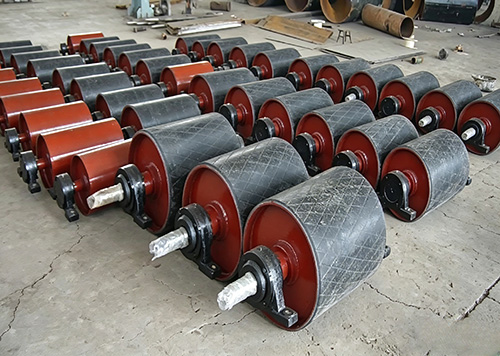
Choosing a supplier should be based on structured evaluation rather than price alone.
You should ask for detailed material composition, hardness range, and performance ratings. A serious manufacturer will provide clear technical documentation.
Look for information about:
Before mass ordering, test sample rollers under real working conditions.
Manufacturers with experience in multiple industries usually offer more stable and adaptable solutions.
A packaging operation experienced recurring belt vibration and uneven product spacing. Initially, the issue was attributed to conveyor alignment.
After analysis, it was found that roller concentricity was inconsistent, causing vibration at operating speeds.
This case highlights how manufacturing quality directly affects operational stability.
Many buyers make avoidable mistakes that lead to long-term problems:
These mistakes often lead to premature roller failure and increased downtime costs.
A high-quality rubber roller manufacturer improves your system in several measurable ways:
Even small improvements in roller quality can lead to noticeable operational savings in large-scale conveyor systems.
Even the best rubber rollers require proper maintenance.
Regular inspection helps identify early wear or deformation.
Dust buildup can affect friction performance and rotation balance.
Instead of waiting for failure, implement preventive replacement cycles.
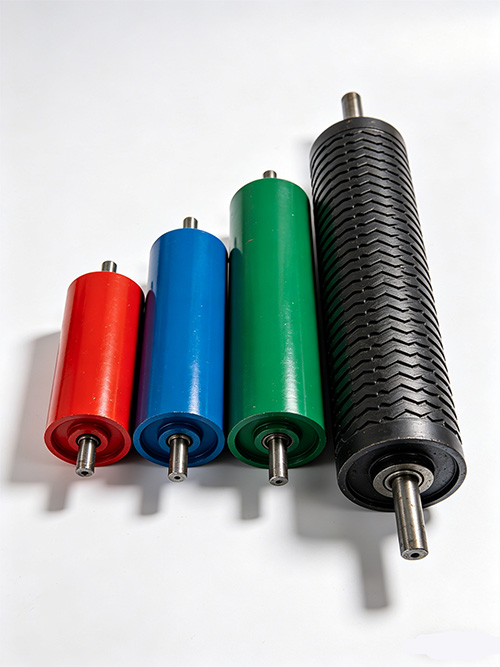
To avoid sourcing risks, always ask:
These questions help you separate professional manufacturers from low-quality suppliers.
The industry is moving toward more advanced manufacturing technologies, including:
These improvements are making modern rubber rollers more durable, stable, and energy-efficient than ever before.
Choosing the right rubber roller manufacturer is not just about purchasing a component—it is about ensuring long-term stability, efficiency, and reliability in your conveyor system. When you focus on manufacturing quality, technical capability, and real-world performance, you significantly reduce operational risks and improve overall system productivity.
A well-made rubber roller is not just a part—it is a performance guarantee for your entire production line.
What does a rubber roller manufacturer do?
A rubber roller manufacturer designs and produces rollers used in conveyor and industrial systems, ensuring performance, durability, and precision.
How do I choose a reliable rubber roller manufacturer?
Evaluate material quality, bonding technology, machining precision, and quality testing systems before choosing a supplier.
What causes rubber roller failure?
Common causes include poor bonding, uneven hardness, bearing failure, and lack of balancing.
How long do rubber rollers last?
Lifespan depends on usage conditions, but high-quality rollers can last several years under normal industrial operation.
Can rubber rollers improve conveyor efficiency?
Yes, they reduce friction, improve belt stability, and lower energy consumption in conveyor systems.