Are you ready to customize your product?
Fill in your information and requirements, and we will address your inquiry promptly!

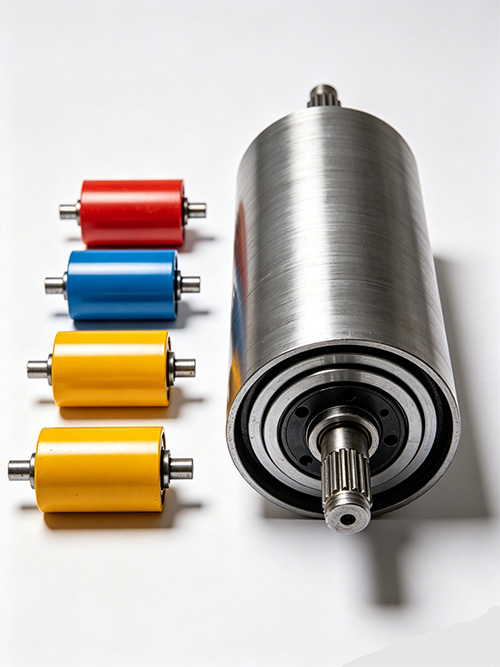
If your conveyor system struggles with inconsistent speed, frequent belt slipping, unexpected shutdowns, or rising energy consumption, the issue may not come from the motor or control system. In many industrial cases, the real performance bottleneck is hidden inside a critical but often underestimated component: conveyor belt drive rollers.
Unlike standard support rollers, drive rollers are directly responsible for transmitting power from the drive system to the conveyor belt. That means any inefficiency, wear, or misalignment in these rollers immediately affects the entire production line. In high-demand industrial environments, even a small improvement in drive roller performance can lead to noticeable gains in throughput, energy efficiency, and system stability.
In this guide, you will learn how conveyor belt drive rollers work, how to select the right type for your system, how they impact operational costs, and how real-world systems are optimized using proper roller configuration strategies.
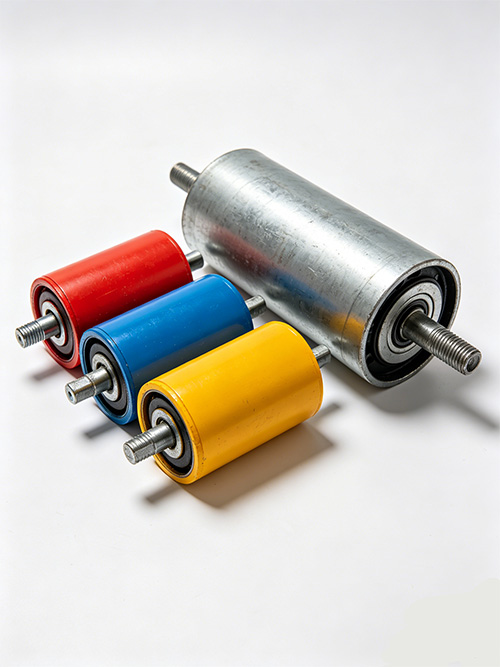
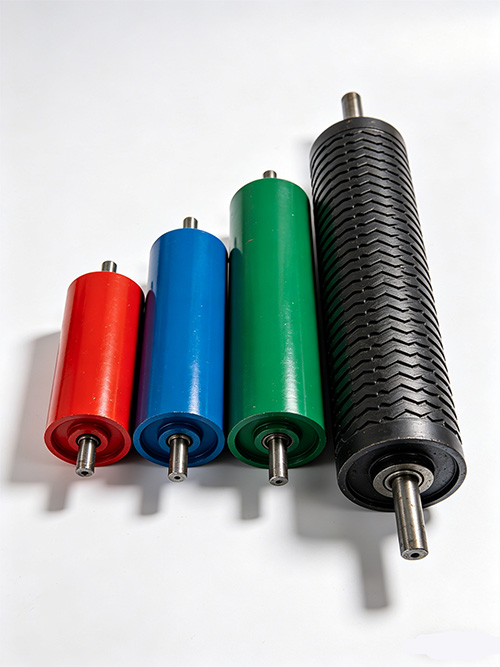
Conveyor belt drive rollers are powered rollers that transfer mechanical energy from a motor to the conveyor belt, enabling controlled movement of materials across the system. They are typically installed at the head or tail of a conveyor system, depending on the design.
Their role is not just to rotate the belt. They are responsible for:
In industrial terms, the drive roller is the “force transmission core” of your conveyor system. If it fails or underperforms, the entire system loses efficiency immediately.
Even slight issues such as surface wear or uneven torque distribution can lead to belt slippage, which increases energy consumption and reduces system reliability.
From an engineering perspective, drive rollers are where mechanical energy becomes motion. Any inefficiency at this stage multiplies across the entire conveyor system.
Industry observations in material handling systems show that poorly optimized drive rollers can:
This means optimizing drive rollers is not optional—it is a direct lever for improving operational profitability.
To choose the right solution, you need to understand the different types of drive rollers and how they function in real applications.
These rollers are covered with a rubber layer to increase friction between the roller and the conveyor belt. They are widely used in systems where belt slippage must be minimized.
Steel rollers are used in heavy-duty environments where durability and load resistance are more important than friction enhancement.
These rollers are coated with specialized lagging materials designed to improve grip and reduce wear under high-torque conditions.
In advanced systems, the motor is integrated directly into the roller, reducing mechanical complexity and improving control accuracy.
Designed for high-load applications, these rollers provide stronger traction and are suitable for bulk material handling systems.
| Drive Roller Type | Key Feature | Best Application | Main Advantage |
|---|---|---|---|
| Rubber-Coated Roller | High friction surface | General industrial conveyors | Prevents belt slippage |
| Steel Roller | High durability | Heavy-duty systems | Long service life |
| Lagged Roller | Enhanced grip surface | High-torque operations | Improved traction stability |
| Motorized Roller | Integrated motor | Automated production lines | High precision control |
| High-Torque Roller | Strong power transmission | Bulk material handling | Handles heavy loads easily |
Choosing the correct drive roller is not about selecting the strongest or most expensive option. It is about matching system requirements with roller performance characteristics.
You need to calculate the maximum load your conveyor will handle. Higher loads require rollers with stronger torque capacity and better surface grip.
Different conveyor belts respond differently to surface friction. Rubber-coated or lagged rollers are often required for smooth belt synchronization.
High-speed conveyors require precision-balanced rollers to avoid vibration and uneven motion.
Dust, moisture, and temperature fluctuations affect roller performance. Sealed and corrosion-resistant designs are essential in harsh environments.
The efficiency of energy transfer between motor and belt depends heavily on roller surface condition and alignment.
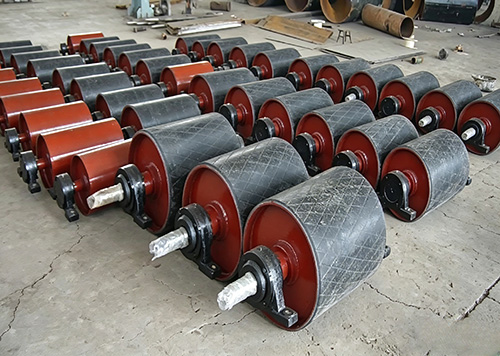
A packaging facility experienced frequent production interruptions caused by belt slippage during peak operating hours. Initially, the issue was attributed to motor overload.
After system analysis, the root cause was identified as worn drive roller surfaces with reduced friction. This led to inconsistent torque transfer.
This case clearly shows that improving drive roller performance can resolve issues often misdiagnosed as motor failures.
If your system is experiencing inefficiencies, the following issues may be related to drive roller selection:
Most of these problems are not structural failures but performance mismatches between roller type and operating conditions.
Proper maintenance ensures long-term efficiency and reduces unexpected downtime.
Check for wear, cracking, or surface degradation that may reduce traction.
Misalignment leads to uneven belt tension and premature wear.
Worn bearings increase resistance and reduce system efficiency.
Dust and debris accumulation reduce friction performance.
Proactive replacement prevents sudden system failure during peak operation.
Energy consumption in conveyor systems is strongly influenced by drive roller efficiency. When rollers lose traction, motors must compensate by increasing output.
This leads to:
Optimized drive rollers reduce mechanical resistance, improving energy transfer efficiency between motor and belt.
To maximize system performance, consider the following optimization approaches:
Choose roller coatings based on belt material compatibility.
Larger diameter rollers reduce bending stress on belts and improve stability.
Balanced rollers reduce vibration and extend system life.
Sensor-based monitoring helps detect early signs of wear or misalignment.
Before selecting conveyor belt drive rollers, evaluate:
Answering these ensures you select a roller system that matches real operational needs.
Conveyor belt drive rollers are one of the most important components in any conveyor system, directly influencing efficiency, stability, and energy consumption. By carefully selecting the right type, maintaining proper alignment, and implementing preventive maintenance strategies, you can significantly improve system performance and reduce long-term operational costs.
Instead of viewing drive rollers as simple mechanical parts, you should treat them as critical performance drivers that determine the overall success of your conveyor system.
What is the function of conveyor belt drive rollers?
They transmit power from the motor to the conveyor belt, enabling controlled material movement.
How do drive rollers differ from standard rollers?
Drive rollers actively move the belt, while standard rollers only support it.
What causes drive roller failure?
Common causes include surface wear, bearing damage, misalignment, and overload conditions.
How often should drive rollers be replaced?
Replacement depends on usage intensity, but regular inspection is essential to avoid unexpected failure.
Can drive rollers improve conveyor efficiency?
Yes, properly selected rollers reduce slippage, improve energy transfer, and enhance system performance.
If you’re unsure which conveyor belt drive rollers are best for your system, load conditions, or production environment, our experts are here to help. Contact us today for a personalized consultation, and ensure your conveyor system delivers stable power transmission, higher efficiency, and long-lasting performance. Don’t wait until unexpected downtime affects your production—get in touch now to optimize your system and keep your operation running smoothly!