Are you ready to customize your product?
Fill in your information and requirements, and we will address your inquiry promptly!

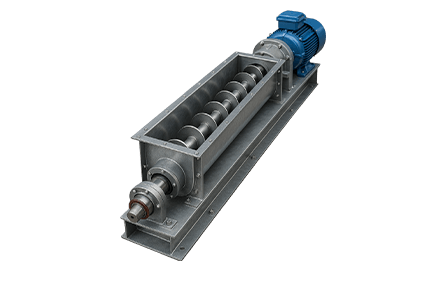
If you’re responsible for optimizing production, improving throughput, or reducing labor costs, you might already know that material handling plays a pivotal role in your facility’s performance. But when it comes to moving bulk solids—like grains, powders, pellets, granules, or even sludge—the screw conveyor is often one of the most efficient and cost‑effective solutions available.
This guide is designed specifically for you—whether you’re an engineer, plant manager, procurement specialist, or operations lead—so you can understand what really matters when choosing a screw conveyor supplier, what features impact performance, and how to ensure you’re getting an appropriate, reliable system.
Throughout this article, we’ll break down:
Finally, you will gain actionable insights that will help you make confident decisions, choose the right screw conveyor supplier, and improve your plant’s material handling operations.
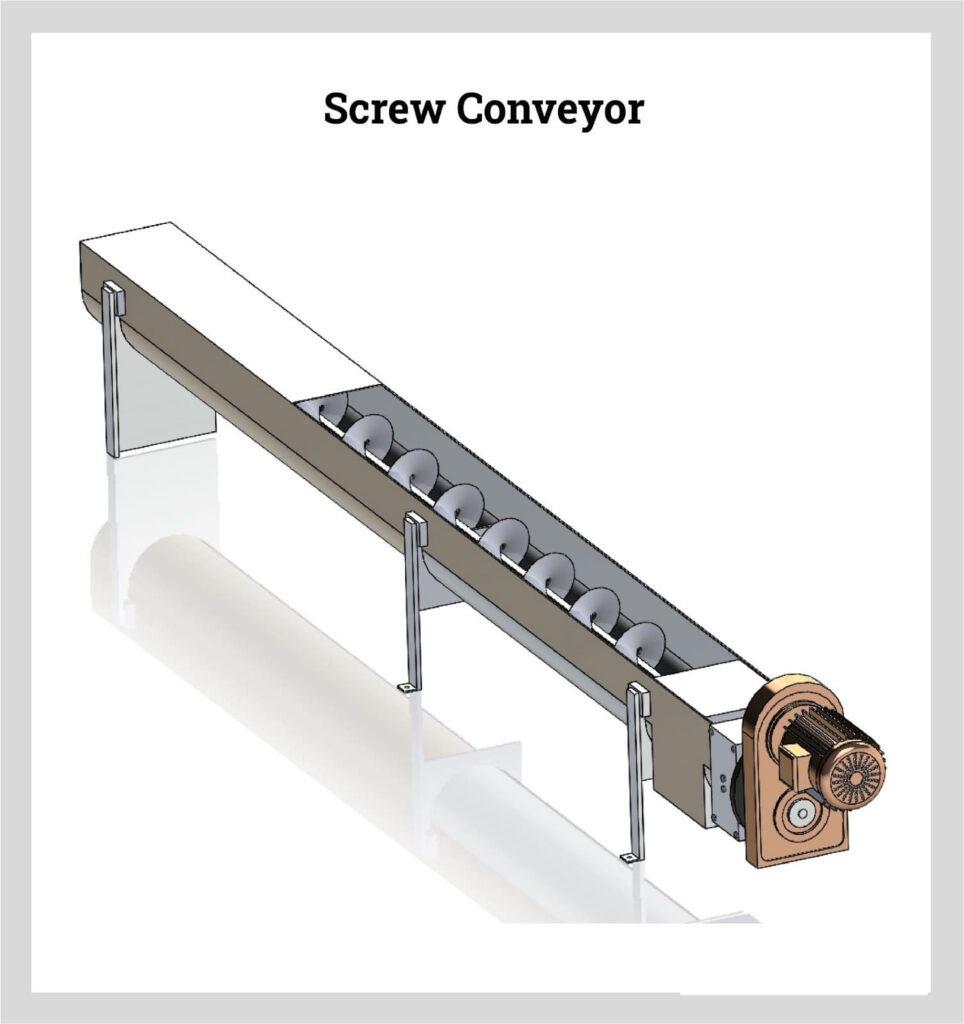
A screw conveyor (sometimes called an “auger conveyor”) is a mechanical conveying system that uses a helical screw element to transport materials horizontally, vertically, or at an incline. The basic design includes a trough or tube with a rotating screw blade that moves material along its length.
They’re widely used in:
Unlike belt conveyors, a screw conveyor uses rotational motion to push material. Rotation speed, pitch of the screw flights, trough design, and material characteristics determine how efficiently the system will move product.
Before we dive deeper into choosing a screw conveyor supplier, let’s highlight what a high-quality screw conveyor should deliver:
| Benefit | What It Means for You |
|---|---|
| Consistent Flow | More predictable material movement with minimal blockages |
| Space Optimization | Can be installed vertically, horizontally, or inclined |
| Low Maintenance | Fewer moving parts than many bulk handling systems |
| Dust Control | Enclosed design reduces airborne material |
| Customizability | Designed to meet material type, volume, and layout needs |
| Cost‑Effectiveness | Lower capital and operating costs versus other conveying systems |
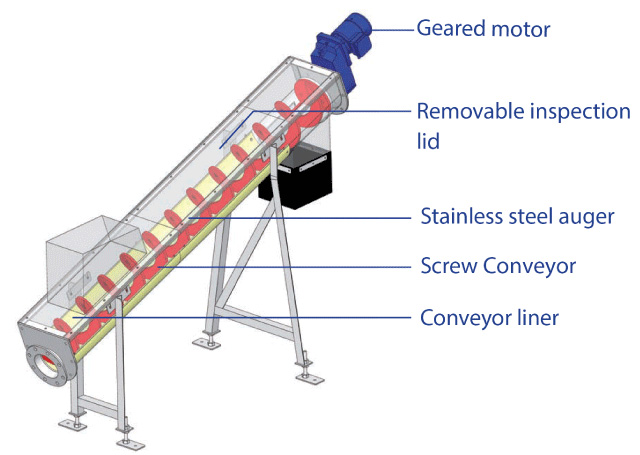
When evaluating screw conveyor suppliers and proposals, focus on these technical and operational criteria:
Material characteristics influence screw design:
For example, conveying powdered chemicals requires different design considerations than moving grains in a feed mill.
| Orientation | Typical Use Case | Key Considerations |
|---|---|---|
| Horizontal | Short distance feed | Lower energy, easier to maintain |
| Inclined | Elevation change | Reduced capacity with angle increase |
| Vertical | Lifting only | Highest energy usage, design challenges |
Flight pitch and diameter affect capacity and power draw:
Screw conveyors must be compatible with your product and environment:
External standard reference: Material selection guidelines from ASM International.
Good screw conveyor suppliers design for:
Now let’s look at how real facilities used screw conveyors to solve production challenges.
Challenge: A mid-size feed mill struggled with bottlenecks moving raw grains to blending silos. Their existing belt conveyors needed frequent cleaning due to material spillage.
Solution: Installed a series of horizontal and inclined screw conveyors with enclosed troughs and variable pitch flights.
Outcome:
Key takeaway: Choosing a conveyor designed for dusty, small-particle grain significantly improved efficiency.
Challenge: A chemical compounding facility experienced high conveyor downtime due to abrasive material wear.
Solution: The screw conveyor supplier redesigned the screw with reinforced flights and selected a wear-resistant alloy, along with larger bearings to handle load cycles.
Outcome:
You can learn more about conveyor wear and maintenance best practices from this technical primer on bulk solids handling.
With so many options available, how do you objectively compare screw conveyor suppliers? Here’s a checklist you can use:
✔ Lead Times—Are they realistic and transparent?
✔ Engineering Support—Do they provide design review and optimization?
✔ Installation Assistance—On-site support or guidance?
✔ Experienced Engineers—Can they tailor designs to your material and layout?
✔ Quality Standards—ISO or equivalent production quality control?
✔ Documentation—Clear drawings, BOMs, and maintenance manuals?
✔ Spare Parts Availability—Fast delivery for critical items
✔ Service Contracts—Planned maintenance vs reactive repairs
✔ Responsive Support—Phone, email, or field service?
| Metric | Why It Matters |
|---|---|
| On-Time Delivery | Keeps your project schedules on track |
| Warranty Terms | Protects investment against defects |
| References / Reviews | Verified performance from other customers |
Once you select a vendor, proper installation plays a critical role in longevity.
This industrial commissioning checklist from Process Industry Practices can serve as a general guide.
Routine maintenance prevents unplanned shutdowns.
For maintenance scheduling and asset management ideas, see this resource on industrial maintenance best practices.
To optimize material flow and cost, track:
| Metric | Target |
|---|---|
| Uptime | ≥ 98% |
| Average Throughput | As per design capacity |
| Energy Consumption | Monitor by load factor |
| Maintenance Hours | Reduce year-over-year |
A performance dashboard like this helps you track improvements and make data-driven decisions.
| Mistake | Impact |
|---|---|
| Oversizing conveyor | Higher cost, unnecessary power usage |
| Ignoring material properties | Frequent blockages |
| Poor sealing | Dust issues, safety concerns |
| Inadequate after-sales support | Longer downtimes |
Selecting the right screw conveyor supplier isn’t just about price—it’s about long-term performance, uptime, and integration into your specific production environment. With the right design choices, installation practices, and maintenance plans in place, you can drastically improve efficiency while reducing long-term operating costs.
Q1: What is the ideal screw conveyor speed?
A: It depends on material type; start with vendor recommendations and adjust based on flow consistency while avoiding material degradation.
Q2: Can screw conveyors handle wet or sticky materials?
A: Yes, but they often require special flights, liners, and trough coatings to prevent buildup and sticking.
Q3: How do I determine conveyor capacity?
A: Capacity depends on screw diameter, pitch, speed, and material bulk density. Many screw conveyor suppliers provide calculation tools.
Q4: Are screw conveyors energy-efficient?
A: Generally, yes—especially for short distance horizontal conveying compared to pneumatic systems.
Q5: How often should maintenance be scheduled?
A: Daily visual checks, weekly lubrication, monthly inspections, and annual overhauls are typical recommendations.
Ready to Transform Your Material Handling Operations?
Don’t let outdated or inefficient conveyors slow down your production. Partner with a trusted screw conveyor supplier to get custom-engineered solutions that improve throughput, reduce downtime, and lower maintenance costs.
Request Your Free Consultation Today — Our engineering team will review your facility layout, analyze your material needs, and recommend the optimal conveyor system tailored for your operation.