Are you ready to customize your product?
Fill in your information and requirements, and we will address your inquiry promptly!


If you are managing a production line or warehouse, you know that material flow is rarely linear. Bottlenecks occur when products need to change direction, merge, or shift between lines. Manually handling these transitions consumes labor, slows production, and increases error risk.
A transfer conveyor is designed to solve exactly these challenges. It allows you to redirect, merge, rotate, or precisely position pallets, trays, or product boxes without manual intervention. This flexibility not only optimizes your layout but also maximizes space utilization and throughput.
This article will guide you through practical considerations for selecting, designing, and integrating a transfer conveyor into your workflow, with actionable examples you can apply immediately.
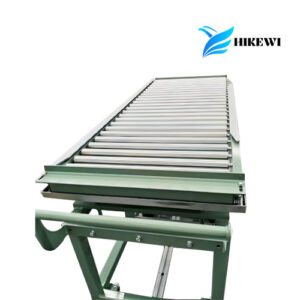
At its core, a transfer conveyor is an automated material handling device that enables controlled changes in product path and orientation. Unlike standard conveyors, which move products in a straight line, transfer conveyors can:
From your perspective, this means you can achieve complex material handling tasks without expanding your floor space or increasing labor costs.
When you evaluate material handling upgrades, a transfer conveyor offers measurable advantages:
The result is a highly adaptable system that meets the demands of modern manufacturing and logistics environments.
Transfer conveyors are widely applicable across industries that require flexible material movement.
In automotive plants, transfer conveyors redirect parts or subassemblies between stations for quality inspection or assembly without disrupting line flow.
Benefit: Smooth integration with robotic assembly and inspection systems, reducing cycle time and operator fatigue.
For packaged goods, transfer conveyors can merge multiple production lines into a single packing station.
Benefit: Maintains high throughput while ensuring products are oriented correctly for automated packaging or labeling.
Handling trays of delicate components or assembled electronics often requires rotation or precise positioning before robotic pick-and-place.
Benefit: Protects fragile items while enabling accurate downstream automation.
In fulfillment centers, transfer conveyors re-route cartons or totes efficiently to appropriate packing or sorting zones.
Benefit: Improves order accuracy and throughput while minimizing manual handling.
To achieve optimal performance, you must consider several factors:
| Design Factor | Key Consideration |
|---|---|
| Load type | Pallets, trays, or boxes determine conveyor surface and roller design |
| Path change angle | Determines mechanical configuration (merge, split, rotate) |
| Speed & throughput | Must align with upstream and downstream processes |
| Automation & sensors | Positioning, line tracking, and feedback for robotics integration |
| Floor space constraints | Modular design allows tight integration in compact areas |
| Maintenance access | Easy access for cleaning, inspection, and servicing |
Focusing on these factors ensures your transfer conveyor delivers reliability, safety, and maximum efficiency.
Scenario:
An electronics manufacturer faced frequent bottlenecks because manual operators were rotating trays for robotic pick-and-place stations.
Solution:
A transfer conveyor with rotation modules and automated alignment was installed to merge multiple input lines and rotate trays precisely.
Results:
| Metric | Before | After |
|---|---|---|
| Line stoppages per week | 12 | 2 |
| Manual labor hours/day | 8 | 2 |
| Cycle time per tray | 45 seconds | 18 seconds |
| Product misalignment | 5% | 0.5% |
The system allowed the plant to increase throughput while reducing labor dependency and operator errors.
Scenario:
A beverage bottling plant needed to merge two parallel filling lines into a single labeling and packaging line. Manual transfers caused delays and occasional product jams.
Solution:
A transfer conveyor with merging capabilities and integrated sensors was installed to automate the line merge.
Outcome:
This shows how transfer conveyors can streamline complex material flows without expanding facility footprint.
From your perspective, to maximize ROI, you should:
Following these steps ensures your transfer conveyor operates smoothly and consistently.
When monitoring conveyor performance, key metrics include:
| Metric | Target / Ideal |
|---|---|
| Throughput (items/hour) | Match or exceed production target |
| Downtime (%) | <5% for automated lines |
| Product alignment accuracy | >99% correct orientation |
| Energy consumption | Optimize motor usage based on load |
| Maintenance events | Scheduled preventive maintenance |
Tracking these metrics allows you to identify bottlenecks, optimize line flow, and plan upgrades effectively.
Safety is paramount. From your perspective, transfer conveyors must integrate:
By combining safety features with automation, you increase throughput without increasing risk.
Avoiding these mistakes ensures your investment delivers long-term operational efficiency.
When evaluating a transfer conveyor, consider:
| Cost Component | Traditional Manual Handling | Transfer Conveyor |
|---|---|---|
| Labor | High | Reduced by 40–70% |
| Throughput | Limited by human speed | Continuous, optimized |
| Errors/Misalignment | Frequent | Minimal |
| Floor space usage | Large | Compact, flexible |
| Maintenance | Manual intervention frequent | Predictable preventive maintenance |
Well-designed transfer conveyors often pay for themselves within months by reducing labor, errors, and downtime.
A transfer conveyor is more than a material handling device—it is a strategic tool for optimizing production layout, increasing throughput, and reducing manual labor. Proper design, integration, and maintenance ensure that your conveyor handles merges, rotations, and path changes reliably, giving you a competitive edge.
By adopting transfer conveyors, you can transform complex material flows into smooth, automated processes, reduce floor space requirements, and achieve measurable efficiency gains.
Can transfer conveyors rotate products continuously?
Yes, rotation modules can reorient products precisely for downstream automation.
Are they suitable for high-speed production lines?
Absolutely, provided the conveyor speed and automation are synchronized with upstream/downstream processes.
How do they handle different product sizes?
Modular designs and adjustable guides allow handling of varying pallet, tray, or box dimensions.
Can transfer conveyors be integrated with robotic pick-and-place systems?
Yes, sensors and positioning modules allow precise synchronization with robotic operations.
How often is maintenance required?
Scheduled inspections for rollers, drive motors, and sensors typically prevent unplanned downtime.