Are you ready to customize your product?
Fill in your information and requirements, and we will address your inquiry promptly!


If you’re managing a production line, food processing plant, packaging facility, or warehouse, you’ve likely encountered bottlenecks caused by inadequate conveyor systems. Traditional solid-belt conveyors can limit airflow, make cleaning difficult, and reduce efficiency in high-temperature or wet environments. That’s where mesh conveyor belts come in.
A mesh conveyor belt is designed to allow air, liquids, or small debris to pass through while transporting products smoothly, making it ideal for drying, cooling, washing, or high-temperature applications. By incorporating mesh belts into your workflow, you can enhance process efficiency, improve product quality, and simplify maintenance.
In this guide, you’ll learn how to select, implement, and maintain mesh conveyor belts effectively to meet your operational goals.
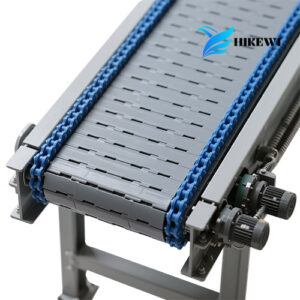
A mesh conveyor belt consists of interlinked wires, rods, or synthetic materials forming an open-grid surface. Unlike solid belts, the mesh structure allows:
Mesh belts come in various materials, including stainless steel, carbon steel, or high-performance plastics, each suited to different industrial applications.
With open-grid design, air and liquid can pass freely, allowing faster cooling, drying, or draining. For instance, a baked goods line can reduce cooling time by 25% using mesh belts.
By preventing water or heat retention, mesh belts minimize spoilage and improve consistency in processing. Products maintain texture, shape, and integrity better than with solid belts.
The open structure makes mesh belts easier to wash or sanitize, essential in food, pharmaceutical, or chemical industries.
| Feature | Solid Belt | Mesh Belt |
|---|---|---|
| Airflow | None | Excellent |
| Cleaning | Difficult | Easy |
| Heat Resistance | Moderate | High |
| Product Stickiness | High | Low |
Mesh belts made from stainless steel or specialized plastics can handle extreme temperatures, making them suitable for ovens, furnaces, or freezing lines.
Selecting the right mesh conveyor belt depends on several factors:
Mesh size affects airflow, drainage, and product support. Smaller items require tighter meshes; larger items can use more open grids.
Check compatibility with motor drives, sprockets, and supporting frames. Proper integration ensures smooth operation and reduces wear.
Scenario:
A bakery producing thousands of baked goods per day faced slow cooling times and product sticking on solid belts.
Solution:
They installed mesh conveyor belts made from stainless steel with a medium mesh pitch.
Results:
| Metric | Before | After |
|---|---|---|
| Cooling Time (min) | 20 | 15 |
| Product Stickiness | High | Minimal |
| Throughput (units/hr) | 5000 | 6500 |
| Cleaning Time (hr/day) | 1.5 | 0.5 |
The bakery reduced cooling time by 25%, increased throughput, and simplified cleaning procedures.
Scenario:
A component manufacturer needed to wash metal parts before coating but had poor drainage and high rework rates with solid belts.
Solution:
They switched to a stainless steel mesh conveyor belt, allowing water and cleaning solutions to drain directly through the belt.
Results:
| Metric | Before | After |
|---|---|---|
| Rework Rate (%) | 12 | 3 |
| Downtime (hr/week) | 10 | 4 |
| Water Usage (L/day) | 2000 | 1200 |
By using a mesh belt, the manufacturer improved cleaning efficiency, reduced water usage, and decreased defective parts.
When implementing mesh conveyors, you need to consider:
Maintaining mesh conveyor belts ensures longevity and consistent performance:
Common Issues & Solutions:
| Problem | Cause | Solution |
|---|---|---|
| Belt misalignment | Uneven tension | Adjust tension and track |
| Product catching | Oversized mesh | Switch to finer mesh |
| Wear or breakage | Overload | Reduce load or upgrade belt |
| Excessive noise | Dry rollers | Lubricate or replace rollers |
Mesh belts are widely used in industries such as:
Integration with sensors, automated controls, or robotic systems can further optimize workflow and reduce labor.
Depending on your layout, you may use:
Investing in mesh belts can yield measurable returns:
Example ROI Table:
| Cost/Benefit | Value |
|---|---|
| Installation Cost | $25,000 |
| Monthly Labor Savings | $5,500 |
| Product Waste Reduction | $1,200/month |
| Increased Throughput Value | $4,000/month |
| Payback Period | ~3 months |
Mesh conveyor belts are a versatile, high-performance solution for industrial operations. By allowing airflow and liquid drainage, reducing product sticking, and simplifying maintenance, they enhance efficiency, product quality, and throughput. With proper selection, installation, and maintenance, you can achieve measurable ROI, reduce labor, and streamline your workflow.
Investing in a mesh conveyor belt is not just about moving products — it’s about optimizing processes, reducing waste, and empowering your operation to run at maximum efficiency.
What is a mesh conveyor belt?
A mesh conveyor belt is an open-grid belt allowing air or liquids to pass through while transporting products.
Are mesh belts suitable for high temperatures?
Yes, stainless steel or heat-resistant plastics can handle extreme heat.
How often should mesh belts be cleaned?
Daily cleaning is recommended for food and chemical processes; weekly for dry applications.
Can mesh belts handle small or irregular items?
Yes, but mesh size must be chosen to prevent items from falling through.
What maintenance is required?
Inspect links, rods, sprockets, rollers, and tension regularly; clean debris and lubricate as needed.
Ready to optimize your production line with mesh conveyor belts?
Contact us at hikewi to get a tailored solution, improve throughput, reduce labor costs, and enhance product quality. Request a free consultation today!