Are you ready to customize your product?
Fill in your information and requirements, and we will address your inquiry promptly!

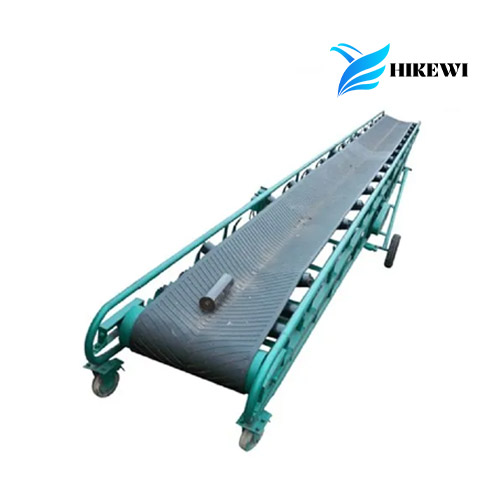
A flat belt conveyor is a versatile material handling system designed to transport items smoothly and efficiently along a continuous belt. The system consists of a flat, flexible belt made of multiple layers of fabric or synthetic materials, pulleys, a drive motor, and tensioning mechanisms. The belt moves over rollers or sliders, allowing materials to travel from one point to another with minimal resistance.
Flat belt conveyors are particularly valued for applications requiring a smooth, consistent surface. They are commonly used in woodworking, packaging, assembly lines, and logistics operations. Their ability to transport delicate or small items without causing damage makes them ideal for situations where maintaining product integrity is critical.
Flat belt conveyors can handle variable loads and lengths, and with proper integration, they can operate in automated environments with sensors and robotic systems. Data from recent industry surveys shows that properly maintained flat belt conveyors can achieve throughput rates up to 30% higher than comparable roller systems in medium-weight material handling, making them a highly efficient choice.

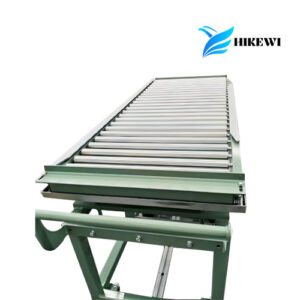
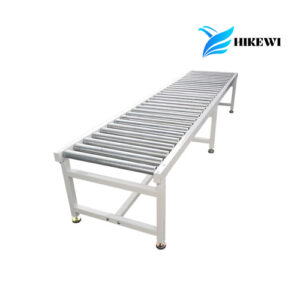
Roller conveyors, on the other hand, consist of a series of cylindrical rollers mounted within a frame. They can be powered or gravity-driven and are designed to move rigid, heavy, or palletized loads efficiently. Roller conveyors are widely used in logistics, manufacturing, and distribution centers where items are uniform in size and weight.
The main advantage of roller conveyors is their ability to handle heavy items with minimal energy consumption, especially when utilizing gravity-driven designs. However, because items make contact only at specific points along the rollers, sensitive or irregular materials may be prone to scratches or uneven movement. According to operational efficiency studies in mid-sized manufacturing facilities, roller conveyors excel in handling pallets or boxes exceeding 50 kilograms, while flat belt conveyors are preferable for items below 25 kilograms that require a smooth transport surface.
The choice between a flat belt conveyor and a roller conveyor depends on several factors, including material type, load, production speed, and space constraints. The following table summarizes the key differences:
| Feature | Flat Belt Conveyor | Roller Conveyor |
|---|---|---|
| Surface Contact | Continuous, smooth | Point contact |
| Material Handling | Suitable for delicate/small items | Suitable for heavy or palletized loads |
| Speed Control | Precise and adjustable | Limited, depends on roller drive |
| Maintenance | Belt tensioning, alignment, surface cleaning | Roller lubrication, alignment, chain maintenance |
| Integration | Easy integration with automation & robotics | Integration possible, less precise handling |
| Space Usage | Requires flat surface, can be curved | Can handle inclines, more flexible layouts |
| Ideal Load | Light to medium weight | Medium to heavy weight |
Understanding these differences allows you to select the conveyor that aligns with your production needs. For example, flat belt conveyors are better suited for delicate board materials in furniture or packaging lines, while roller conveyors excel in handling heavier or palletized products in industrial warehouses.
When deciding which conveyor fits your line, consider the following:
Material Type and Shape: Flat belt conveyors handle soft, fragile, or irregularly shaped items effectively. Roller conveyors are ideal for rigid, uniform items, or pallets.
Space and Layout Constraints: If your production line requires curved paths or compact layouts, flat belt conveyors can be configured for curves with proper design. Roller conveyors offer flexibility for inclines or declines but may require additional support structures.
Production Speed and Automation Needs: Flat belt conveyors allow precise speed control and synchronization with automated systems, robotic arms, and sensors. Roller conveyors can be automated but may have limitations in handling precision-sensitive items.
While flat belt conveyors may have a higher initial cost compared to roller conveyors due to belt material and motorized systems, they offer advantages in reduced material damage, consistent quality, and integration with automation. Over time, the ROI becomes evident through lower labor costs, fewer product defects, and higher throughput. Studies in manufacturing operations indicate that implementing a flat belt conveyor in packaging lines increased production efficiency by 25% and reduced manual handling errors by 40%.
To ensure reliable operation, flat belt conveyors require regular maintenance, including:
Safety measures include installing emergency stops, using guards to prevent accidental contact, and ensuring proper dust collection to reduce respiratory hazards. Regular inspection not only extends equipment life but also minimizes production downtime.
To maximize the efficiency of a flat belt conveyor, monitor key metrics:
Integration with sensors and predictive maintenance systems can further enhance performance, allowing early detection of misalignment or belt wear before it affects production.
A mid-sized furniture manufacturer integrated a flat belt conveyor to sand and transport MDF panels. By using dual sanding heads synchronized with the conveyor, the workshop reduced manual handling, improved surface flatness, and increased throughput by 30%.
A packaging facility replaced a gravity roller conveyor with a flat belt system to transport delicate cartons. This minimized surface damage and allowed for synchronized feeding into automated packing machines, improving overall line efficiency by 25%.
In a high-volume production facility, combining flat belt conveyors for delicate items and roller conveyors for heavier pallets optimized the production line. The hybrid system reduced handling errors and maintained consistent quality across diverse product types.
Choosing between a flat belt conveyor and a roller conveyor requires careful consideration of material type, load weight, line layout, and production speed. Flat belt conveyors excel in handling delicate or small items, provide smooth and consistent transport, and integrate seamlessly with automated systems. Roller conveyors are ideal for heavy or palletized items and offer low-energy transport solutions.
By evaluating your production needs and understanding the capabilities of each system, you can optimize your line for both efficiency and product quality. Investing in the right conveyor system ensures higher throughput, reduced labor, and consistent results across your operations.
For customized flat belt conveyor solutions and professional guidance, explore Laienka (Shandong) Trading Co., Ltd. to find systems tailored to your production requirements.
Can flat belt conveyors handle heavy pallets?
Flat belt conveyors are ideal for light to medium loads. For heavier pallets, a reinforced or wider belt may be required, or a hybrid system can be used.
How do I maintain a flat belt conveyor to reduce downtime?
Regular belt inspections, tension adjustments, cleaning, and motor maintenance ensure long-term reliability.
Which conveyor is more energy-efficient?
Flat belt conveyors can be energy-efficient if the belt is properly tensioned and load is optimized. Roller conveyors consume less energy for heavy, gravity-driven transport.
Can I integrate a flat belt conveyor with robotics?
Yes, flat belt conveyors offer precise speed control and are highly compatible with robotic arms, automated sorting systems, and sensors.
What is the expected lifespan of a flat belt conveyor?
With proper maintenance, a high-quality flat belt conveyor can operate reliably for 10–15 years.