Are you ready to customize your product?
Fill in your information and requirements, and we will address your inquiry promptly!
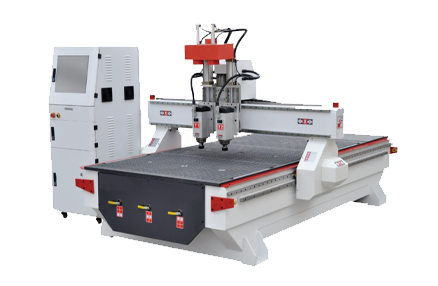
Precision and efficiency are crucial in modern woodworking, especially when producing custom furniture, decorative panels, or complex designs. Traditional manual engraving cannot keep up with high-volume, high-precision demands. This is where CNC woodworking engraving machines come in, enabling manufacturers to turn creative concepts into production-ready components with exceptional accuracy and speed.
This article explores how CNC woodworking engraving machines—from three-axis to five-axis models—can transform your production workflow, enhance quality, and expand your creative capabilities.
A CNC woodworking engraving machine is a computer-controlled system designed to automate the cutting, carving, and engraving of wood panels. By combining precise motors, a stable frame, and advanced CNC controls, these machines deliver consistent and accurate results across a variety of designs and panel sizes.
Manufacturers can handle both fine-detail custom work and large-scale production, making CNC engraving machines versatile for furniture production, interior panels, and custom woodworking projects.
The Hikewi woodworking engraving machine is engineered for reliability, precision, and high-speed performance. Its core features include:
These features make Hikewi CNC woodworking engraving machines ideal for workshops and manufacturers aiming to achieve both creativity and efficiency.

The three-axis CNC engraving machine moves the cutting tool along the X, Y, and Z axes, providing precise control for most flat and moderately contoured wood surfaces.
Advantages include:
For example, a mid-sized furniture manufacturer implemented a three-axis CNC machine to produce cabinet doors with intricate panel designs. They reported a 30% reduction in production time and a significant improvement in edge consistency.

The five-axis CNC engraving machine adds rotation around two additional axes, allowing the cutting tool to approach the material from virtually any angle. This capability is essential for complex curved surfaces, detailed 3D engravings, and furniture components with intricate geometries.
Advantages include:
Manufacturers using five-axis machines can tackle designs previously impossible with traditional methods, turning ambitious creative concepts into production-ready components.
CNC woodworking engraving machines integrate seamlessly with other woodworking equipment, such as edgebanders and sanding lines, to form a continuous production line. This integration allows:
By combining three-axis and five-axis machines in your production workflow, you can match the right tool to the complexity of each component, maximizing efficiency and minimizing waste.
| Feature | Three-Axis CNC | Five-Axis CNC |
|---|---|---|
| Movement | X, Y, Z | X, Y, Z + A, B rotation axes |
| Best For | Flat or slightly contoured surfaces | Complex curves and 3D shapes |
| Production Scale | Medium | Large-scale & high-precision |
| Setup Time | Short | Moderate |
| Cost | Lower | Higher |
| Accuracy | High | Very high for intricate designs |
This table helps manufacturers choose the right CNC solution based on design complexity, production volume, and budget.
To ensure optimal performance:
Adhering to these practices ensures reliable performance, high-quality engraving, and long machine life.
Hikewi CNC engraving machines are suitable for a variety of woodworking applications:
By selecting the right machine configuration, manufacturers can expand their product offerings, reduce production time, and maintain superior quality.
Hikewi CNC woodworking engraving machines, available in both three-axis and five-axis models, provide a powerful solution for turning creative concepts into precise, production-ready components. Whether you are producing intricate custom designs or high-volume furniture panels, these machines combine reliability, efficiency, and precision to elevate your woodworking capabilities.
By integrating CNC engraving machines into your workflow, you gain flexibility, reduce labor costs, and ensure consistent high-quality output, empowering your workshop to meet modern production demands and exceed customer expectations.
Can the machine handle hardwoods as well as softwoods?
Yes, Hikewi CNC engraving machines can process a wide range of wood types with adjustable spindle speed and feed rates.
How do three-axis and five-axis machines differ in setup complexity?
Three-axis machines are simpler to program and ideal for standard panels, while five-axis machines require more advanced programming but can handle complex geometries.
What production volume is achievable?
Depending on machine configuration and workflow integration, both three-axis and five-axis machines support small custom orders up to large-scale production.
How is operator safety ensured?
Safety protocols include enclosed work areas, emergency stops, and operator training on CNC software and hardware.
Can these machines integrate with other CNC woodworking equipment?
Yes, they can be combined with edge banding machines, sanding lines, and automated material handling systems to form a fully integrated production line.