Are you ready to customize your product?
Fill in your information and requirements, and we will address your inquiry promptly!

If you are responsible for manufacturing, logistics, or operational efficiency, you already know the challenges of modern production: high labor costs, inconsistent product quality, and the pressure to meet ever-tightening deadlines. Manual operations and semi-automated setups often become bottlenecks that slow down your entire workflow.
This is where an automated production line becomes a strategic tool, not just a technology upgrade. By integrating robotics, sensors, and advanced control systems, you can transform your manufacturing process into a fully coordinated, high-efficiency ecosystem.
This article is written for you if you are evaluating automation options, planning to expand your production, or seeking practical insights on implementing a production line that balances efficiency, cost, and quality.
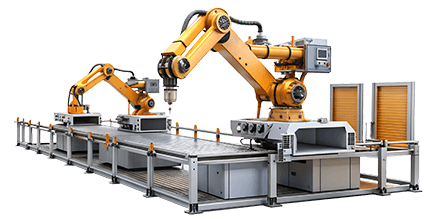
From a practical perspective, an automated production line is more than a series of machines. It is a cohesive system designed to handle materials, process components, and deliver finished products with minimal human intervention.
Key benefits from your perspective include:
Unlike traditional semi-automated equipment, modern automated production lines adapt to product variations, volume changes, and industry-specific requirements without extensive reconfiguration.
Global industry trends make automation increasingly necessary:
For you, an automated production line addresses these challenges by combining flexibility, reliability, and predictive control.
At Hikewi, we design and build customized automated production lines tailored to your operational needs.
From your perspective, this ensures stable product quality, reduced cost, and maximum production efficiency.
Understanding the components helps you evaluate capabilities and costs:
| Component | Function | Impact on Your Operation |
|---|---|---|
| Robots | Handling, assembly, palletizing | Reduces labor, increases precision |
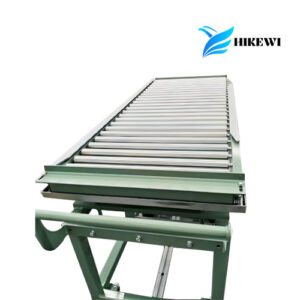
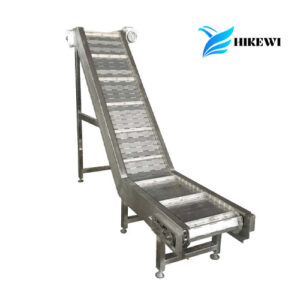
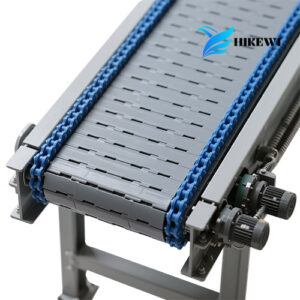
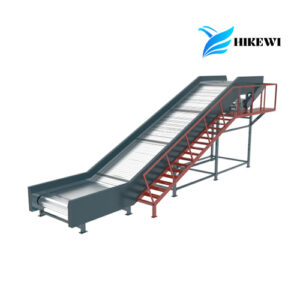
| Conveyors | Material transport | Continuous flow, minimal delays |
| Sensors | Detect position, quality, defects | Prevents errors and downtime |
| PLC & Control Systems | Centralized monitoring & adjustment | Ensures coordinated operations |
| Safety Systems | Light curtains, emergency stops | Protects workers and prevents accidents |
Proper integration of these elements determines whether your line achieves maximum throughput or falls short.

Scenario:
A mechanical component manufacturer faced bottlenecks in assembly and packaging, relying heavily on manual labor for high-precision tasks.
Challenge:
Solution:
Hikewi designed an automated production line integrating multi-axis robots for assembly and vision-guided inspection systems. Conveyors and centralized control optimized workflow.
Results:
| Metric | Before | After |
|---|---|---|
| Assembly throughput | 500 units/day | 1200 units/day |
| Labor hours/day | 40 | 12 |
| Error rate | 3.5% | 0.5% |
| Changeover time | 2 hours | 15 minutes |
Scenario:
A mid-sized food processor struggled to maintain hygiene and speed during packaging of baked goods.
Solution:
Hikewi implemented an automated production line with robotics handling packaging, conveyors for product flow, and sensors ensuring compliance with hygiene and safety standards.
Outcome:
This shows how automation is not just about speed—it ensures product safety and consistency, which are critical in food processing.
The combination of robotics and sensors allows real-time adjustments to:
From your perspective, this reduces scrap, downtime, and manual supervision, while maintaining a consistent workflow.
Throughput depends on more than individual machine speed:
| Variable | Impact on Throughput |
|---|---|
| Robot cycle time | Directly affects units/hour |
| Conveyor length & speed | Determines flow continuity |
| Changeover flexibility | Reduces downtime during product swaps |
| Sensor response time | Minimizes defect-induced stoppages |
Implementing an automated production line provides measurable benefits:
| Category | Traditional Line | Automated Line | Notes |
|---|---|---|---|
| Labor cost | High | Reduced by 50–70% | Robots replace repetitive manual tasks |
| Product defects | 3–5% | <1% | Sensor-guided inspection reduces errors |
| Production downtime | Frequent | Minimal | Predictive monitoring prevents stoppages |
| Energy efficiency | Moderate | Optimized | Coordinated systems reduce idle time |
Automation also improves workplace safety:
For you, this translates into fewer injuries, compliance with OSHA standards, and reduced insurance costs.
Avoiding these pitfalls ensures your investment delivers both ROI and operational reliability.
An automated production line is not just a technological upgrade—it is a strategic enabler that transforms your manufacturing, packaging, or assembly process. By combining robotics, sensors, and advanced control, you can increase throughput, reduce costs, stabilize product quality, and enhance safety.
If you want to stay competitive in today’s high-demand manufacturing environment, investing in automation is no longer optional—it is essential.
Can automated lines handle multiple product types?
Yes, flexible robotics and programmable control allow for high-mix production.
How long does it take to implement a line?
Implementation depends on complexity but typically ranges from 3–9 months for full integration.
Are automated lines suitable for small-scale operations?
Yes, they can be scaled to your production volume and future growth.
What maintenance is required?
Regular inspection of robotics, sensors, PLC systems, and conveyors; predictive monitoring helps prevent unexpected downtime.
Can automation improve product quality?
Yes, real-time control and sensor monitoring maintain consistent output and reduce defects.
If you are considering how an automated production line could fit into your facility, visit hikewi to explore industrial automation solutions designed for your operational needs, maximizing efficiency and reducing cost.