Are you ready to customize your product?
Fill in your information and requirements, and we will address your inquiry promptly!

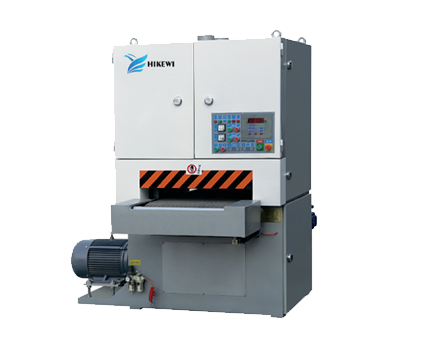
When it comes to professional woodworking, the quality of surface finishing directly affects both the appearance and durability of the final product. Heavy-duty wood sanders are essential tools for achieving precise, smooth, and consistent results in a variety of applications, from furniture making to large-scale panel processing. Unlike basic handheld sanders, these machines are designed to handle high production volumes, irregular surfaces, and demanding materials, ensuring efficiency and accuracy throughout the workshop.
Heavy-duty wood sanders are industrial-grade machines designed to perform high-speed, high-precision sanding on wood and composite materials. They combine robust mechanical components with precise control systems to maintain consistent surface quality. Professionals rely on these machines not only to save time but also to maintain uniformity across multiple workpieces.
The main benefits of heavy-duty wood sanders include increased production efficiency, reduced labor costs, and improved surface finishing quality. They are particularly useful in environments where precision and consistency are non-negotiable, such as cabinetry, furniture manufacturing, flooring production, and plastic pipe processing.
This machine is optimized for sanding various types of wood and wood-plastic composite materials. Equipped with precision-balanced soft rubber rollers, it provides smooth and even contact with the surface. The sanding belt speed is controlled via a variable frequency drive, allowing adjustments for different material types. The conveyor height is managed through a microcomputer controller for quick, precise adjustments. This machine is indispensable in furniture and bamboo wood flooring production.
Profile sanders are designed for sanding irregular or contoured surfaces, including cabinet doors, window frames, and decorative panels. Features include a removable spindle for easy polishing wheel replacement, variable frequency control for sanding speed, and a reciprocating polishing motion to ensure even coverage on complex surfaces. This patented machine is engineered to increase sanding efficiency on curved and profiled surfaces, making it ideal for fine woodworking applications.
Specially designed for PP-R plastic pipes, this sander removes burrs and smooths surfaces after cutting. Adjustable speed and pressure ensure consistent results across different pipe diameters ranging from 20mm to 160mm. The machine includes a precision guide rail system and an integrated dust collection system, maintaining a clean working environment while meeting environmental standards. It can operate as a standalone device or integrate into automated production lines for improved throughput and quality.
PR wide-belt sanders are ideal for thickness calibration, fine sanding, and surface finishing of various boards including hardwood, MDF, particleboard, and veneered panels. Featuring a heavy-duty cast iron frame and precision roller conveyor system, they maintain stability and uniform feed. Multiple sanding units allow coarse, medium, and fine sanding in one pass, while the integrated dust collection system ensures a clean workspace. According to industry data, integrating such sanders into automated lines can increase production efficiency by up to 60% compared to manual sanding.
Designed for comprehensive multi-stage sanding, four-wheel sanders handle coarse sanding, intermediate sanding, fine sanding, and polishing in a single process. This machine is widely used in large-scale wood processing factories, providing higher production efficiency and superior surface quality for extensive panels.
Two-wheel sanders offer flexibility for sanding different surfaces and thicknesses. By combining two sanding units with adjustable sanding belts, operators can achieve various levels of finish from coarse to fine, improving board smoothness and flatness. These machines are commonly employed in the woodworking and panel processing industry.
When selecting a wood sander, focus on features that affect both performance and longevity:
Heavy-duty sanders are versatile across multiple industries:
Using industrial wood sanders provides measurable benefits:
Proper maintenance ensures maximum performance and long service life:
| Machine Type | Ideal Application | Key Features | Efficiency Impact |
|---|---|---|---|
| Wood Plastic Sanding Machine | Furniture, bamboo floors | Soft rubber roller, variable feed speed, microcontroller | High-quality surface finishing |
| Profile Sanding Machine | Board doors, cabinets, frames | Removable spindle, reciprocal polishing, patented tech | Improved contour sanding efficiency |
| PP-R Sander Machine | PP-R plastic pipes | Adjustable speed/pressure, dust collection | Uniform surface and diameter |
| PR Sanding Machine | MDF, plywood, veneer boards | Multi-unit sanding, heavy-duty frame, dust collection | Up to 60% productivity increase |
| Four-Wheel Sander | Large-scale wood panels | Four sanding units, multi-step sanding | Comprehensive sanding in one pass |
| Two-Wheel Sander | Woodworking boards | Two sanding units, adjustable sanding intensity | Flexible rough and fine sanding |

Choosing the right sander depends on several factors:
Selecting the correct machine ensures consistent, high-quality sanding while maximizing efficiency and safety in your workshop.
Heavy-duty wood sanders are essential tools for professional woodworking, offering precision, efficiency, and consistent surface quality. Whether you work with hardwood, MDF, plywood, or composite boards, selecting the right sander can dramatically improve production speed while ensuring a flawless finish. By considering machine type, sanding speed, pressure control, and dust collection, you can optimize your workflow, reduce manual labor, and maintain a clean, safe workspace. Investing in the right wood sander is not just about finishing wood—it’s about enhancing your workshop’s overall productivity, quality, and long-term operational efficiency.
What is a wood sander used for?
A wood sander is used to smooth surfaces, remove imperfections, and prepare wood or composite materials for finishing or coating.
How do I choose the right wood sander for my project?
Consider the material type, production volume, sanding precision, and features like adjustable speed, pressure control, and dust collection.
What types of wood sanders are available?
Common types include belt sanders, orbital sanders, profile sanders, wide-belt sanders, and multi-wheel sanders for professional applications.
How often should I maintain my wood sander?
Inspect sanding belts, rollers, and mechanical components regularly. Clean dust and debris after each use and replace consumables as needed to maintain optimal performance.
Can a wood sander be used for both flat and curved surfaces?
Yes, profile sanders and multi-wheel sanders are specifically designed to handle irregular, curved, or contoured surfaces, providing uniform sanding results.
If you’re unsure which wood sander is best for your workshop or production line, our experts are here to help. Contact us today for a personalized consultation, and ensure your sanding process is efficient, precise, and reliable. Don’t wait until quality issues slow you down—get in touch now to improve your workflow and achieve perfect finishing results!