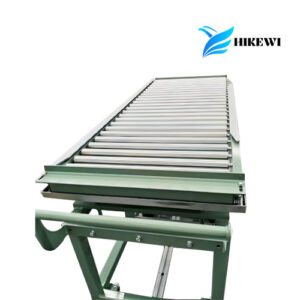
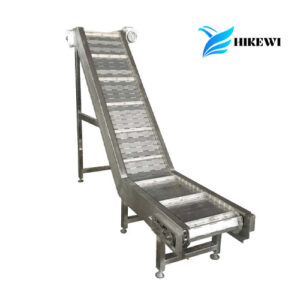
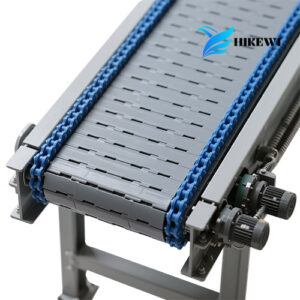
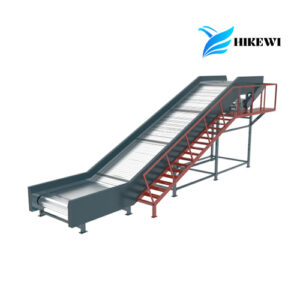
Are you ready to customize your product?
Fill in your information and requirements, and we will address your inquiry promptly!


When you evaluate material handling systems for your factory or warehouse, you quickly realize that complexity is not always an advantage. In many real production environments, what you need most is stability, predictability, and cost control. This is exactly why the rubber flat belt conveyor remains one of the most widely used conveying solutions across industries.
You may already be using roller conveyors, chain systems, or modular belts. Yet, when the material flow requires continuous transport, gentle handling, and low maintenance, rubber flat belt conveyors often outperform more complicated alternatives. Their structure is simple, their behavior is easy to predict, and their performance is well understood by operators and maintenance teams alike.
This article helps you understand how to select, design, and apply a rubber flat belt conveyor based on real operational needs—rather than marketing buzzwords. By the end, you’ll be able to evaluate whether this conveyor type is right for your application, how to optimize it for long-term use, and how to avoid common design mistakes that quietly increase costs.
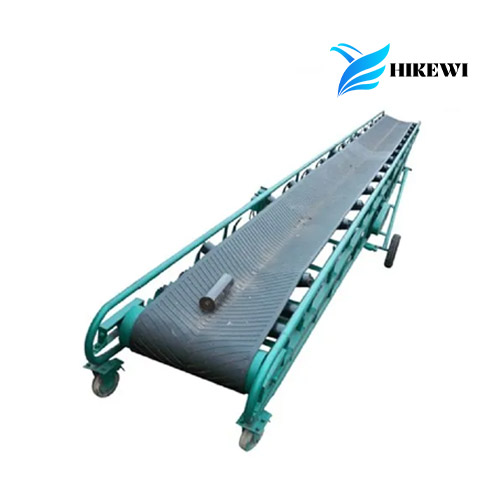
At its core, a rubber flat belt conveyor is a fixed conveying system that transports materials using a continuous flat belt made from multiple layers of bonded fabric, typically canvas or synthetic textiles, coated with rubber compounds.
This layered construction is not accidental. Each layer serves a specific purpose:
Because the belt is flat and flexible, it distributes load evenly across its surface. This makes it especially effective when you need to transport items that are irregular in shape, fragile, or sensitive to impact.
From a mechanical standpoint, the simplicity of this structure is its greatest strength. Fewer moving parts mean fewer failure points, easier troubleshooting, and lower long-term maintenance costs.
In an era dominated by automation and robotics, it’s easy to assume that traditional conveyor systems are outdated. However, your real-world constraints—budget, space, workforce skill level, and maintenance capability—often tell a different story.
Rubber flat belt conveyors remain relevant because they offer:
When you compare total cost of ownership rather than just purchase price, these conveyors consistently deliver predictable performance with minimal surprises.
You’ll find rubber flat belt conveyors operating quietly and reliably in industries where uptime matters more than novelty.
In general manufacturing lines, flat belt conveyors are often used to move components between workstations. Because the belt surface is continuous and stable, it prevents parts from tipping or vibrating during transport.
For dry or packaged food items, rubber flat belts provide smooth transport while minimizing product damage. Their ability to maintain consistent speed is critical for synchronized downstream processes.
Wood panels, boards, and semi-finished products benefit from the belt’s shock-absorbing characteristics. The rubber surface reduces surface scratches and edge damage.
In distribution centers, rubber flat belt conveyors are frequently used for cartons, totes, and parcels where consistent spacing and orientation are required.
Before choosing a conveyor type, you need to analyze the material itself. Rubber flat belt conveyors perform best when your material has the following characteristics:
| Material Property | Suitability |
|---|---|
| Moderate weight | Excellent |
| Irregular shape | Very good |
| Fragile surface | Excellent |
| Sharp edges | Conditional |
| Sticky material | Not recommended |
If your material is abrasive but not excessively sharp, a reinforced rubber cover can significantly extend belt life. However, extremely sharp or oily materials may require specialized belt formulations or alternative conveyor designs.
Consider a mid-sized mechanical assembly plant struggling with frequent product misalignment on a roller conveyor system. Components would shift during transport, leading to manual intervention and inconsistent assembly timing.
By switching to a rubber flat belt conveyor, the plant achieved:
The flat belt provided continuous support across the entire product base, eliminating the gaps that caused instability on rollers. Over time, maintenance costs also decreased because fewer mechanical components were exposed to wear.
Even a simple conveyor system can underperform if it’s poorly designed. When specifying a rubber flat belt conveyor, pay attention to these critical factors.
Oversizing the belt width slightly can significantly improve stability and reduce edge wear. Narrow belts under heavy loads tend to drift and require frequent tracking adjustments.
For longer conveyors, a properly selected drive system ensures consistent belt tension and minimizes slippage. Underpowered drives increase wear and energy consumption.
Impact at the loading point is one of the primary causes of premature belt failure. Using impact beds or cushioned loading zones protects both the belt and the structure.
Temperature, humidity, and dust levels all influence belt selection. Choosing the right rubber compound ensures consistent performance over time.
To make an informed decision, you should compare rubber flat belt conveyors with other common systems:
| Conveyor Type | Strengths | Limitations |
|---|---|---|
| Rubber Flat Belt | Stable, cost-effective, versatile | Limited for steep inclines |
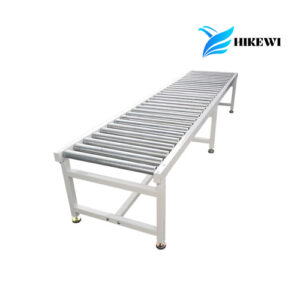
| Roller Conveyor | Low energy use | Poor for irregular items |
| Modular Plastic Belt | Easy cleaning | Higher initial cost |
| Chain Conveyor | Heavy-duty loads | Noisy, higher maintenance |
For applications prioritizing smooth transport and cost control, rubber flat belts often strike the best balance.
One of the reasons rubber flat belt conveyors are popular is their straightforward maintenance requirements. Still, neglect can shorten their lifespan.
You should implement:
Preventive maintenance costs far less than unplanned downtime, especially in continuous production environments.
While rubber flat belt conveyors are not always marketed as “energy-saving,” their efficiency comes from low friction and steady motion. Compared to stop-and-go systems, continuous belts reduce peak energy demand and mechanical stress.
Over time, this translates into:
In modern facilities, rubber flat belt conveyors often act as the backbone of automated production lines. Their predictable behavior makes them easy to integrate with sensors, diverters, and robotic stations.
Because speed control is smooth and precise, synchronization with upstream and downstream equipment becomes simpler. This reliability is critical when automation depends on timing accuracy.
Many performance issues are not caused by the conveyor itself but by design oversights:
Avoiding these mistakes during the planning phase saves significant costs later.
When you look beyond short-term performance metrics, rubber flat belt conveyors consistently deliver strong return on investment. Their durability, ease of repair, and wide availability of components reduce long-term risk.
For facilities that value uptime, consistency, and cost predictability, simplicity often proves to be the most advanced solution.
If your operation requires stable, continuous, and economical material transport, a rubber flat belt conveyor deserves serious consideration. It may not be the most complex system on the market, but its reliability, adaptability, and proven performance make it a cornerstone of industrial material handling.
By understanding your material, environment, and production goals, you can design a system that delivers value year after year—without unnecessary complexity.
How long does a rubber flat belt conveyor typically last?
With proper maintenance and correct material selection, belt life can range from several years to over a decade, depending on operating conditions.
Can rubber flat belt conveyors handle inclined transport?
They can manage mild inclines, but steeper angles usually require cleated belts or alternative conveyor types.
Are rubber flat belts suitable for continuous operation?
Yes. They are commonly used in 24/7 production environments due to their stable performance.
How do I choose the right belt thickness?
Belt thickness depends on load weight, impact at loading points, and required tensile strength.
What is the most common cause of belt failure?
Improper loading and misalignment are the leading causes, not material defects.