Are you ready to customize your product?
Fill in your information and requirements, and we will address your inquiry promptly!


If you are responsible for production efficiency, warehouse operations, or logistics automation, palletizing is probably not the most visible part of your workflow—but it is often one of the most problematic. Manual palletizing is labor-intensive, repetitive, and increasingly difficult to staff. Even semi-automatic systems struggle when product formats change, volumes fluctuate, or safety requirements tighten.
This is why many operations like yours are now actively evaluating a pallet robot.
A pallet robot is not just about replacing manual labor. It is about stabilizing throughput, protecting workers, and giving your operation the flexibility to scale without constant reconfiguration. In today’s manufacturing and logistics environments, palletizing is no longer a “last step”—it is a strategic control point.
This article is written for you if you are exploring robotic palletizing for the first time, upgrading an existing solution, or trying to understand whether a pallet robot truly fits your operation rather than becoming another underused asset.
From a technical standpoint, a pallet robot is an industrial robotic system designed to stack products—such as cartons, bags, or cases—onto pallets in a predefined or dynamically optimized pattern.
From your perspective, however, its real value lies elsewhere:
Unlike traditional palletizers that rely on fixed mechanical movements, a pallet robot uses programmable motion, vision, and flexible tooling. This allows it to adapt to different product types, pallet sizes, and stacking rules without major mechanical changes.
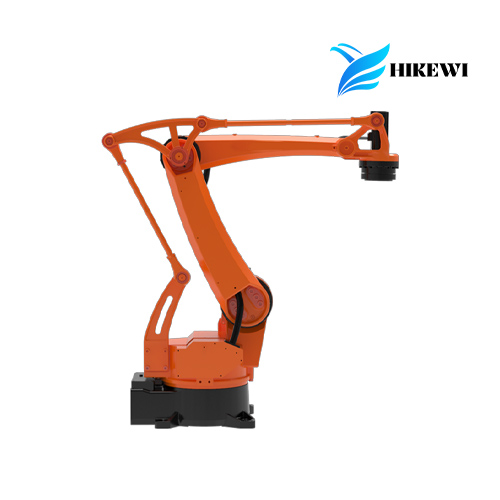
Several industry-wide pressures are pushing pallet robots from “nice to have” to “expected”:
If your upstream processes are already automated, manual palletizing becomes the weakest link. A pallet robot restores balance to the line.
To evaluate whether a pallet robot fits your needs, you need to understand what actually makes up the system. At a practical level, it includes:
Each component influences reliability, flexibility, and long-term cost. Choosing based on robot speed alone is one of the most common mistakes buyers make.
One of the main reasons companies hesitate to invest in pallet robots is concern about change. Product dimensions change. Packaging changes. Customers change.
A well-designed pallet robot system addresses this by separating mechanical capability from software logic. Instead of rebuilding equipment, you adjust pallet patterns, product parameters, and stacking logic through the control interface.
For you, this means:
Flexibility is not just a feature—it is the economic justification for robotic palletizing.
Choosing the wrong robot size leads to underperformance or unnecessary cost. You should evaluate three parameters together:
The robot must handle the product weight plus the gripper. Oversizing increases cost; undersizing reduces reliability.
Insufficient reach limits pallet layouts and reduces usable pallet positions.
Speed must match line output, not peak theoretical performance.
| Parameter | Practical Consideration |
|---|---|
| Payload | Include tooling weight |
| Reach | Allow full pallet coverage |
| Speed | Match real production rate |
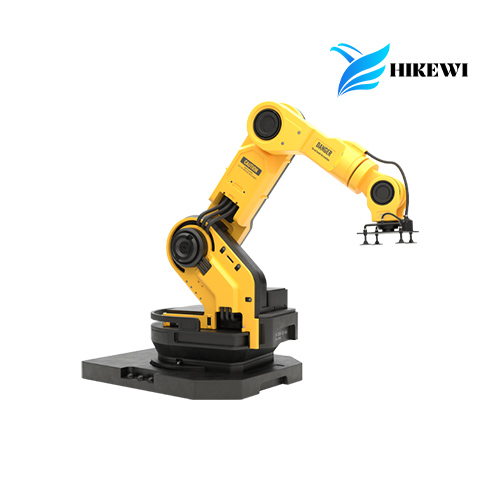
Scenario:
A food packaging facility produced multiple carton sizes on the same line, changing formats daily.
Challenge:
Manual palletizing caused frequent slowdowns and inconsistent pallet quality.
Solution:
A pallet robot with programmable stacking patterns and quick-change tooling.
Results:
| Metric | Before | After |
|---|---|---|
| Palletizing speed | Variable | Stable |
| Labor per shift | 3 operators | 1 supervisor |
| Pallet damage | Frequent | Rare |
| Changeover time | Long | Minimal |
The key improvement was not raw speed, but consistency across product changes.
Scenario:
Heavy bags were manually palletized, leading to frequent safety incidents and worker fatigue.
Solution:
A pallet robot equipped with bag-specific grippers and safety interlocks.
Outcome:
For this operation, safety—not speed—was the primary ROI driver.
Modern pallet robot systems increasingly integrate vision systems to handle product variation and pallet alignment issues.
Vision allows the robot to:
From your perspective, this reduces stoppages caused by minor upstream inconsistencies—issues that are common in real production environments.
A pallet robot never operates in isolation. It must integrate smoothly with:
Poor integration planning leads to idle robots and frustrated operators. Early system-level thinking avoids this.
One common misconception is that pallet robots are always faster than manual labor. In reality, they are more predictable, not always faster.
To avoid bottlenecks, you should:
Robots excel at sustained output over long shifts—not short bursts.
Modern pallet robots rely on layered safety strategies:
For you, this means the robot can operate safely alongside human workers without excessive isolation, improving space utilization.
A pallet robot does not eliminate maintenance—it changes its nature.
Typical maintenance tasks include:
Compared to mechanical palletizers, robotic systems often have fewer wear parts and more predictable maintenance schedules.
Avoiding these mistakes is often more valuable than choosing the “best” robot on paper.
A pallet robot’s ROI typically comes from:
Payback periods vary, but many operations see returns within 18–36 months when systems are properly sized.
A pallet robot should not be viewed as a standalone upgrade. It works best as part of a broader automation roadmap that includes:
When aligned strategically, palletizing becomes a strength rather than a constraint.
A pallet robot is not simply a replacement for manual stacking—it is a tool that gives you control over one of the most labor-intensive and variable stages of your operation. When properly selected and integrated, it improves safety, stabilizes throughput, and prepares your facility for future growth.
For many companies, the question is no longer whether robotic palletizing makes sense—but how long manual palletizing can continue without limiting performance.
Can a pallet robot handle different pallet sizes?
Yes, with proper programming and layout design.
Is robotic palletizing suitable for small operations?
Yes, especially where labor or safety is a concern.
How complex is operator training?
Most systems are designed for intuitive operation after basic training.
What happens during product changeovers?
Changeovers are typically software-based, not mechanical.
Can pallet robots work in harsh environments?
Yes, when specified for the appropriate conditions.
If you are evaluating how a pallet robot could fit into your production or logistics environment, visit hikewi to explore industrial automation solutions designed around real operational needs.