Are you ready to customize your product?
Fill in your information and requirements, and we will address your inquiry promptly!

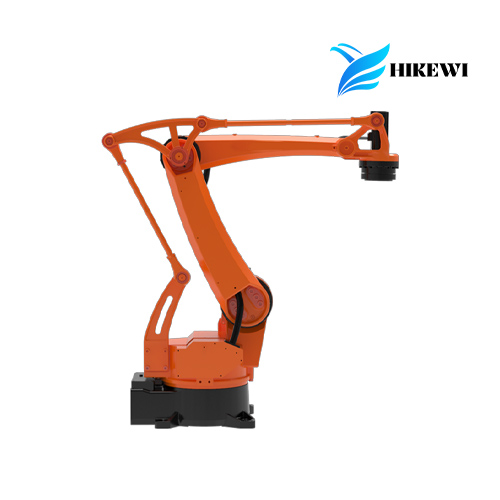
If you’re responsible for optimizing storeroom operations, managing warehouse throughput, or streamlining logistics workflows, you’ve likely felt the friction that manual pallet stacking creates. That’s where storeroom robotic palletizers come into play—automated systems designed to dramatically improve speed, safety, and consistency when organizing products for storage or shipment.
Modern robotic palletizing systems aren’t just fancy add-ons; they’re a fundamental shift in how warehouses, distribution centers, and fulfillment facilities operate. By automating manual, labor-intensive tasks, you can reduce errors, improve safety, and scale your operation without proportionally increasing labor costs. In this guide, you’ll gain actionable insights to evaluate, implement, and optimize these systems for your storeroom.
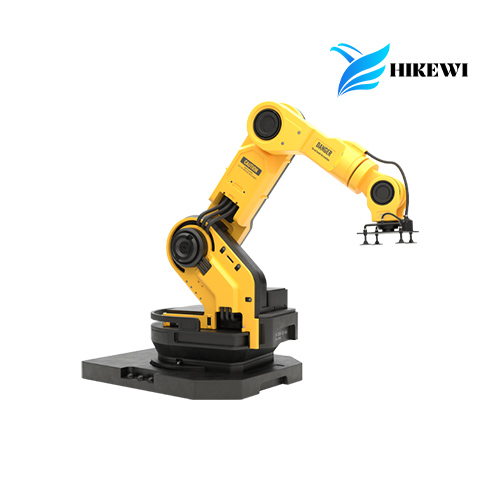
At its core, a storeroom robotic palletizer is an automated system that stacks products onto pallets using robotic arms, sensors, and custom tooling. These systems automate repetitive, physically demanding tasks such as lifting, positioning, and stacking—tasks that would otherwise require significant human labor.
Unlike traditional mechanical palletizers, storeroom robotic palletizers can handle multiple SKUs, varying product sizes, and complex stacking patterns. They precisely control placement to maximize load stability and storage density while reducing product damage.
While specific configurations differ, most systems follow a similar workflow:
This automation reduces variability, increases cycle times, and ensures consistency, especially in high-volume environments.
Robotic palletizers operate continuously with consistent speed, enabling you to increase throughput without adding more labor.
Heavy lifting and repetitive stacking are among the highest-risk warehouse tasks. Robotic palletizers minimize strain and injury risk, allowing your workforce to focus on higher-value responsibilities.
Robotic systems follow precise stacking patterns, reducing pallet tipping, product damage, and handling errors. This ensures better storage utilization and safer transport.
Advanced robotic palletizers can handle multiple product sizes, mixed SKUs, and varied packaging types thanks to programmable patterns and customizable EOATs.
Compact palletizing cells reduce floor space requirements while cutting down the number of operators needed for pallet tasks.
| Type | Best Use | Key Feature |
|---|---|---|
| Single-Arm Robotic Cells | Standard products | Cost-effective and precise |
| Multi-Robot Configurations | High volume or mixed SKUs | Collaborative operations |
| Mixed-Case Palletizers | Multiple SKUs per pallet | Software-optimized stacking patterns |
| Modular Palletizers | Expandable systems | Scalable for growing throughput |
A regional fulfillment center struggled with bottlenecks during peak season. Manual palletizing caused overtime, errors, and delays.
Solution: They implemented a mixed-case robotic palletizer.
Results:
| Metric | Before | After |
|---|---|---|
| Pallets stacked/hr | 50 | 180 |
| Labor hours/week | 120 | 40 |
| Error rate | 15% | 2% |
A warehouse with limited space needed flexibility for seasonal products.
Solution: Deployed a modular robotic palletizer capable of fast reconfiguration.
Outcome:
| KPI | Manual | Robotic |
|---|---|---|
| Accuracy (%) | 85 | 98+ |
| Labor cost/pallet | High | Low |
| Throughput (pallets/hr) | 10–30 | 100–200+ |
| Injury incidents/year | Moderate | Minimal |
| Shift consistency | Variable | Consistent |
Investing in storeroom robotic palletizers is a strategic move that improves efficiency, safety, and scalability. By automating pallet stacking, you reduce labor dependency, minimize errors, and increase throughput. Whether handling mixed SKUs or standard pallets, robotic systems give you predictable, reliable performance—empowering your warehouse to grow efficiently.
Q1: What is a storeroom robotic palletizers?
A: An automated system that stacks items onto pallets precisely, replacing manual labor.
Q2: Can they handle mixed SKUs?
A: Yes, modern robotic palletizers can manage different product sizes and packaging types.
Q3: Are they suitable for small warehouses?
A: Compact and modular designs allow small facilities to implement automation.
Q4: What maintenance is required?
A: Regular checks of EOAT tooling, sensors, and software updates ensure optimal operation.
Ready to Upgrade Your Warehouse?
Partner with an expert storeroom robotic palletizers provider to automate your palletizing operations, increase throughput, reduce labor costs, and improve accuracy.
Request Your Free Consultation Today and get a custom solution tailored for your facility.